The Role of Plant Agricultural Practices on Development of Antimicrobial Resistant Fungi Affecting Human Health: Proceedings of a Workshop Series (2023)
Chapter: 6 Dimensions of Fungicide Regulations, Use Management, and Risk Assessment
6
Dimensions of Fungicide Regulations, Use Management, and Risk Assessment
The fifth session of the workshop explored efforts to assess the extent and causes of antifungal resistance and the role of regulatory bodies in addressing it. Lynn Goldman, Dean and Professor of Environmental and Occupational Health at the Milken Institute School of Public Health at George Washington University, moderated the session. Philip Taylor, training manager at the Centre for Agriculture and Bioscience International (CABI), reviewed data collected from plant care consultation clinics located in low- and middle-income countries (LMIC) around the world and described fungicide usage patterns in various global regions. Nathan Mellor, product manager in the fungicide branch of the Environmental Protection Agency (EPA) Office of Pesticide Programs, Registration Division, outlined the EPA’s process and requirements for registering new or updated fungicides. Magdalini Sachana, policy analyst at the Environment Health and Safety Division of the Organisation for Economic Co-operation and Development (OECD), provided an overview of OECD’s testing guidelines, tools, and data-sharing efforts relevant to fungicide registration. Raquel Sabino, mycologist at the Portuguese National Institute of Health Dr. Ricardo Jorge, Lisbon School of Medicine, discussed occupational exposure to Aspergillus.
Goldman recounted that health risks related to fungal infections have increased in response to a larger proportion of the population being treated with immunosuppressant therapies, coupled with the emergence of new pathogens such as Candida auris. Utilization of antifungal agricultural products has increased, possibly in response to effects of climate change and a shift in demand for specific crops. Resistance is emerging in both medical
and agricultural antifungals, yet the development of new drugs is slow. Goldman stated that these trends pose challenges to regulatory systems on the national and global levels. Striking a balance between addressing public health issues and meeting food supply needs requires dual focus, however. To that end, regulators have tools that can spur data reporting, insights into antifungal use volume and patterns, data production, and additional research.
USE OF FUNGICIDES IN LOW- AND MIDDLE-INCOME COUNTRIES
Taylor provided an overview of Plantwise, a CABI program designed to improve food and financial security through consultation services to small farms. These services are offered at plant clinics, and data from these clinic visits are collected to gain a better understanding of farming practices and challenges in LMICs. He reviewed patterns in fungicide recommendations across four different global regions.
Plantwise Plant Clinics
As a non-profit, science-based development and information organization, CABI specializes in agricultural development, biosecurity, biocontrol, and publishing. Nearly 50 countries are members of this worldwide organization, which has 26 regional offices on six continents. Membership at a modest fee provides consultation services for biosecurity and phytosanitary issues. Plantwise is a CABI global program intended to increase food security by reducing crop losses, thereby improving rural livelihoods. Plantwise offers plant clinics pioneered by CABI to bolster extension services in nations around the globe. Although information is available about practices that improve food security, not all farmers have access to it, noted Taylor. Plantwise clinics address this gap by offering advice tailored to local circumstances. These clinics are temporarily set up in public places, such as markets, village squares, and human health centers. Farmers can discuss a diseased crop or other plant issue, show a sample to an extension worker—referred to as a “plant doctor”—and receive a diagnosis and recommendation for treatment. Plant doctors also give advice on how to prevent the problem from reoccurring. Taylor emphasized that Plantwise clinics are very basic. They do not have scientific equipment such as microscopes, culture media, or autoclaves; plant doctors are only equipped with magnifying glasses, literature, and experience and expertise. Taylor acknowledged that the program’s tagline—“any crop and any problem”—is ambitious, but even if a visit to the plant clinic does not result in a solution, farmers will at least come away with a better idea of what is causing the problem.
Plantwise clinics have reported benefits, with 79 percent of farmers responding that yield increased after visiting a plant clinic and 70 percent indicating increased income. Taylor remarked that Plantwise has a pragmatic view toward chemical application: If chemicals are needed, farmers should use them. However, Plantwise does not recommend indiscriminate or inappropriate use of chemicals, or the use of more toxic products. Over half of the plant clinic prescriptions recommend non-chemical inputs. He added that 25 percent of all Plantwise plant doctors are female. The program relies on 70 private sector organizations and on government partners for funding contributions and donations of staff time toward Plantwise activities.
Plantwise Data Collection
Plant doctors collect data from these interactions, which are recorded on a form received by both the farmer and CABI. The form includes a diagnosis—which may be accurate and precise or may be imprecise—and treatment instructions to address the issue. Taylor noted that Plantwise is gradually moving away from paper forms to electronic forms completed on tablets, which are then sent to the farmer’s phone by an SMS message. If a plant doctor is unsure of a remedy, and they have access to the internet, they can consult the online Plantwise Knowledge Bank.1 This open access data source is available to everyone. Plantwise also has an online management system with restricted access that houses all the data collected at clinic visits. These data can have a political dimension because governments may not always want to disclose that certain pests or diseases are present in their countries. Thus, CABI protects these data and assures governments that data are held securely and will not be shared without permission. He emphasized that these data are utilized without sharing identifying information.
Plantwise Fungicide Use Study
Plantwise conducted data analysis on usage of commercially available fungicides. Taylor noted that botanicals, household products, or other non-commercial agricultural fungicides were not included in the study. Additionally, the study did not distinguish between blends or alternatives (i.e., the data collection tool included blends and alternatives within the same response option). Language issues posed a challenge to data collection, as many of the plant doctors do not speak English as a first language.
___________________
1 The Plantwise Knowledge Bank is available at https://www.plantwise.org/KnowledgeBank (accessed August 9, 2022).
Some forms completed in English were unclear, while other forms completed in the plant doctors’ first languages generated translation issues. Thus, the meaning of individual responses was not always straightforward. Additionally, spelling inconsistencies related to tradenames and chemical names prevented automated data analysis. For example, over 300 spelling versions of mancozeb and mancozeb products were included in responses. Taylor cautioned that Plantwise data may not accurately reflect agricultural problems in a country, nor the treatments actually applied. The data are generated from plant doctor recommendations, not from verified farmer practices. He added that farmers generally do follow plant doctor advice, but that is not guaranteed.
To anonymize data, responses were grouped by global region rather than by country (see Figure 6-1). The regions included Latin America and the Caribbean (LAC), South Asia (SA), Southeast Asia (SEA), and Sub-Saharan Africa (SSA). Record analysis examined fungicide recommendations and percentage of microbial pathogen diagnoses. Taylor specified that the working definition of microbial pathogen that was used included fungi, oomycetes (i.e., water molds), and bacteria; viruses and nematodes were not included. The analysis found that plant doctors in LAC and SA had an approximate ratio of microbial diseases to fungicide recommendations of 1:1 and 1:1.2, respectively. In SEA and SSA, the ratio was approximately 1:0.5, indicating that plant doctors in these regions were less likely to recommend fungicides.
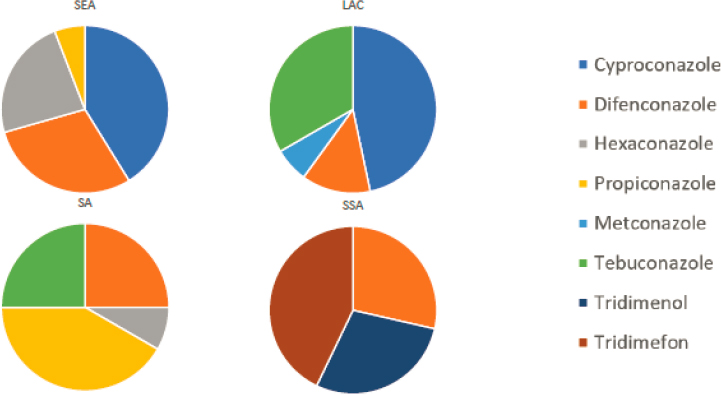
NOTES: LAC = Latin America and Caribbean; SA = South Asia; SEA = Southeast Asia; SSA = Sub-Saharan Africa.
SOURCE: Taylor presentation, June 22, 2022.
Taylor explained that in cases where fungicides were recommended, the diagnoses spurring the recommendations were analyzed. Not surprisingly, “fungus” was the most cited response across regions, accounting for 45–62 percent of recommendations. Oomycetes was common, associated with 7–20 percent of recommendations, depending on region. Bacteria and arthropods were the only other categories that comprised more than 4 percent of responses in all four regions. Less precise categories such as “symptom,” “deficiency,” “environmental,” “disease,” and “unknown” featured less prominently across regions but had substantial responses in one or more regions. He highlighted a finding in SA that a sizable proportion of fungicide recommendations were made for diseases that are not caused by microbial pathogens. Taylor remarked that this indicates prophylactic spraying. For instance, a farmer might present an insect problem to the clinic and be advised to use a mix containing fungicide.
The analysis also categorized the fungicides used according to whether the active ingredient is found in the Fungicide Resistance Action Committee (FRAC) 3 group of fungicides, which is comprised of demethylation inhibitors (DMIs). Taylor emphasized that while the FRAC 3 group is predominantly composed of azoles, not every azole belongs to this group. He noted an unexpected data finding that veterinary products albendazole and clotrimazole are being used in rice fields in SEA against rice blast. Across all regions, plant clinics recommended fungicides with 87 active ingredients from 30 FRAC groups. Of the 37 fungicide active ingredients with the FRAC 3 code, 17 were recommended by Plantwise clinics. Taylor specified that in order to simplify data, a “1 percent rule” was applied, in which an active ingredient was excluded from a region’s analysis if it did not feature in more than 1 percent of that particular region’s responses recommending fungicide. Application of this rule simplified analysis; for example, SSA had 66 active ingredients represented in regional data, but only 15 were featured in more than 1 percent of responses. Across all regions, 34 active ingredients met the 1 percent rule criteria. In comparing the regional fungicide usage rates by FRAC group, variations in regional tendencies became apparent. For instance, 17 percent of all fungicides recommended in SEA were FRAC 3 azoles, compared to 12 percent in SA, 10 percent in LAC, and 7 percent in SSA.
Taylor highlighted that chlorothalonil is an important component of disease control strategies in many countries, yet it was seldom used in LMICs. Five FRAC codes—1, 3, 4, MO1, and MO3—make up more than 84 percent of fungicide records in SA, SEA, and SSA; these codes comprise 61 percent of records in LAC. He noted substantial regional differences in the specific azoles being used in each of the four regions, with difenoconazole being the only azole used in all four regions. SSA appears to be using older azoles, whereas the other three regions are using more modern ones. The study revealed
differences in treating ascomycetes and basidiomycetes—the two fungi phyla to which most plant pathogens belong—and FRAC 3 triazoles were recommended more frequently against ascomycetes than for basidiomycetes across all regions. Additionally, a combination of FRAC 3 and FRAC 11 chemicals was very popular in LAC against both phyla, representing a significant aspect of the disease prevention strategy in that region, but it was not common in the other three regions.
Analysis of the number of active ingredients per recommendation revealed that over 50 percent of recommendations in all regions contained a single active ingredient. Two active ingredients per recommendation were indicated in 25–40 percent of responses for each of the four regions. However, because blends were not differentiated from alternatives, the recommendations indicating two active ingredients may actually signify alternatives rather than blends, Taylor explained. Therefore, blends are not recommended often. When blends were advised, the most popular FRAC 3 blends in LAC were FRAC 3 triazoles and FRAC 11 strobilurins, and in SEA, FRAC 3 triazoles and MO3 mancozeb were most common. In SA and SSA, FRAC 3 blends represent a minor portion of recommended blends. Taylor added that within commercial FRAC 3 blends available to farmers, the other active ingredients are most often FRAC 11 strobilurins. Less frequently, FRAC 5 or FRAC 8 ingredients are used and, in some cases, azoles are mixed with insecticides or even with other azoles.
U.S. FUNGICIDE REGULATION AND REGISTRATION
Mellor outlined the process by which the EPA Office of Pesticide Programs registers fungicides via its fungicide branch. He reviewed conventional pesticides, labeling considerations, and procedures under the Federal Insecticide, Fungicide, and Rodenticide Act (FIFRA),2 and future concerns and initiatives.
Labeling Data Requirements
Conventional pesticides are typically synthetic chemicals that are produced to prevent, mitigate, destroy, or repel any pest or to act as a plant growth regulator, desiccant, or defoliant. These differ from biological pesticides and antimicrobial pesticides, Mellor noted. Conventional pesticides are designed for various use sites including agricultural, turf, and ornamental. Use patterns extend beyond agricultural products to include aquatic, greenhouse, forestry, residential, and indoor spaces. The products come in a
___________________
2 Federal Insecticide, Fungicide, and Rodenticide Act of 1947, Public Law 80-104, 80th Cong., 1st sess. (June 25, 1947).
range of formulations such as liquids, flowable, granules, pellets, dust, and wettable powders; they can be applied via ground, aerial, chemigation, and fogger methods.
The process for registering a pesticide begins with the registrant, who initiates the process by drafting a label and submitting it to EPA for approval, said Mellor. EPA risk managers review the labels, request revisions as necessary, and review any new chemicals involved. Once the risk manager is able to ensure compliance with EPA guidelines and regulations, they grant approval for the product to become usable on the ground. The FIFRA pesticide data requirements for chemical active ingredients include product chemistry, product performance, chemical-specific and product-specific toxicology, ecological effects, exposure and exposure use studies, pesticide spray drift exposure, environmental fate, and residue chemistry. Thus, risk managers have substantial amounts of data to examine during the review process, some of which is generic to the active chemical ingredient and some of which is product-specific.
Product Reviews and Risk Assessments
The product-specific review includes an assessment of acute toxicity, which involves approximately six studies’ worth of data, Mellor explained. Risk managers examine first aid and precautionary statements and listed personal protective equipment (PPE) required to safely handle the product. Conducting a parallel review to risk managers, the product chemistry group reviews all components of the product, generates statements for ingredients and for physical-chemical hazards, and determines whether any present impurities are of concern. Any potential problematic issues are then examined by the toxicology group. Assessments are conducted for human health risks, environmental risks, and benefits. The human health risks assessment includes residue chemistry, dietary exposure, and occupational and residential exposure. Mellor specified that residential exposure does not pertain only to chemicals used in the home—i.e., for general lawn care or flower gardens—but it also includes their use in playgrounds, athletic fields, and other areas where people may be exposed during leisure activities. Environmental risk is assessed for effects on drinking water and ecological fate. This assessment considers factors such as effects on non-target organisms, chemical travel patterns, whether chemicals will contaminate drinking water, whether chemicals will persist in the ground or will travel, and what happens to the chemical in the long term. A benefits analysis assesses crop and disease levels and beneficial effects of the chemical to determine whether any risks to human health and the environment are outweighed by any benefits.
Product Directions and Restrictions
Once all risk assessments are complete, risk managers review the product label to determine compliance, said Mellor. The directions for use must include the product’s agricultural uses, spray drift, mixing instructions, tank mix prohibitions, resistance management, precautions, and restrictions. An established minimum set of restrictions requires a product to list (1) the single maximum application of active ingredient per acre, (2) the annual maximum application rate per acre, (3) the maximum number of applications per year, and (4) the minimum re-treatment interval. Mellor noted that these restrictions constitute an absolute minimum and additional restrictions may be appropriate and applicable for a chemical. For instance, chemicals labeled for multiple crops may have reentry levels, plant back intervals, and preharvest intervals listed in addition to the aforementioned restrictions. Directions for use must also include storage and disposal instructions for end users. These vary depending on the product and on the container in which the chemical is sold or housed. Risk managers also review the warranty statement to ensure it is not false or misleading. For example, manufacturing products—which are designed to be used in creating other products—are typically highly concentrated and are not to be used in the field. Therefore, the warranty for a manufacturing product should not refer to field use, Mellor explained.
Conclusions, Mitigations, and Implementation
All aspects of labeling must adhere to FIFRA and to the Food Quality Protection Act,3 said Mellor. Risk managers ensure that all data requirements are fulfilled, leaving no gaps in the data, and that studies have been performed correctly. If a data gap is identified, the review process halts until receipt of the necessary data. Often, an original submission indicates that more data are needed, and conditionally-required data from secondary studies may come into play in these cases. In an effort to register only products that pose no adverse effects on human health or the environment, label mitigations are applied as appropriate. Chemical-specific or generic data may indicate no adverse effects, but mitigations such as buffers, aquatic restrictions and PPE can minimize potential adverse effects of spray drift, runoff, and worker exposure. Other mitigations can also be applied during the review process, including reduced application rate and maximum number of applications per year.
___________________
3 Food Quality Protection Act of 1996, Public Law 104-170, 104th Cong., 2d sess. (August 3, 1996).
Any labeling mitigations obtained from EPA risk assessments must be integrated into the label prior to approval. Mellor explained that chemicals are re-reviewed every 15 years to ensure that data meet the standards of the day. Risk managers must ensure that any new learnings are implemented for products in this process, including adding mitigations as appropriate. Furthermore, the label review manual is updated periodically to incorporate generalized learnings, such as new types of PPE that are helpful in preventing adverse effects. Any updates in the manual must be reflected in the product label. Risk managers are also responsible for ensuring that all items on a label checklist are complete. Mellor remarked that “the label is the law”: Once a label is reviewed by the product manager or branch chief and is stamped as approved, it becomes legally enforceable.
Several working groups within EPA’s pesticide office work together to ensure that the labeling is clear and concise for users in the commercial and consumer markets, said Mellor. These include the Product Manager Workgroup, the Label Consistency Committee, and the State Label Issues Tracking System. Registrants and users can also contact the risk manager or program manager regarding any concerns about a label’s content. He noted that such direct inquiries are fairly common.
Future Considerations
Mellor stated that the most significant challenge currently facing the EPA label registration process is resource limitations. The recently released EPA work plan, Balancing Wildlife Protection and Responsible Pesticide Use,4 to address the challenge of protecting endangered species from pesticides has generated numerous requests for actions to be added to the work plan that are not currently included. However, the limited workforce will be fully directed at implementing measures already in the 7-year work plan and EPA cannot guarantee additional work can be completed unless mandated, said Mellor. Multiple resistance management efforts are under way for plant pathogens, particularly for fungicides that have a high risk of developing resistance. The agency is discussing a stewardship management plan and a potential resistance assessment, which would focus on antibiotics and involve a modified version of the U.S. Food and Drug Administration’s (FDA’s) Guidance for Industry #152 on evaluating antimicrobial animal drugs.5 Furthermore, EPA is considering ways to strengthen risk assessments. For instance, the agency recently updated the
___________________
4 The work plan is available from https://www.epa.gov/system/files/documents/2022-04/balancing-wildlife-protection-and-responsible-pesticide-use_final.pdf (accessed August 25, 2022).
5 This guidance is available at https://www.fda.gov/media/83488/download (accessed August 10, 2022).
exposure model for seed treatment occupational exposure. Mellor noted that periodic updates are part of overall efforts toward making chemical use as safe as possible.
ORGANISATION FOR ECONOMIC CO-OPERATION AND DEVELOPMENT PESTICIDES PROGRAMME
In a prerecorded presentation, Sachana provided an overview of OECD and the organization’s Pesticides Programme, including its testing guidelines, tools, and data-sharing efforts relevant to fungicide registration that do not differ from the ones applied for all conventional pesticides used as plant protection products.
Organisation for Economic Co-operation and Development
“OECD is a forum in which governments work together to coordinate and harmonize policies,” said Sachana. Government members use this forum to discuss and share their experience on issues of mutual concern and work together to respond to international issues by adopting consensus-based decisions. For example, members could determine that resistance to fungicides within agricultural systems is a mutual problem of concern, then they could convene to discuss the issue and develop consensus-driven solutions. OECD also provides comparative statistic, economic, scientific, and social data in more than 250 publications per year, which are housed in the OECD iLibrary.6 Additionally, the organization develops tools and maintains a database. OECD currently has 38 member countries covering the whole of North America, most of the European Union, Japan and Korea in eastern Asia, Australia and New Zealand, and Chile, Colombia, and Costa Rica in South America. Sachana noted that in addition to member countries, OECD works with Brazil, China, India, Indonesia, and South Africa as key partners.
With a focus on issues relevant to the economy and development, OECD has long been active in agriculture sustainability, Sachana stated. In 1992, the OECD Pesticides Programme was established to streamline pesticide approval processes. One of the program’s objectives is to develop practical and harmonized tools that countries can use to implement legislation regarding safe pesticide use. These tools include test guidelines, standardized formats for data submission, and risk assessment methodologies. The Pesticides Programme focuses on sustainable approaches toward plant protection, such as new technologies for pesticide design and application that reduce risks to humans and wildlife. She added that many OECD countries are shifting away from using conventional pesticides.
___________________
6 The OECD iLibrary is available at www.oecd-ilibrary.org (accessed August 10, 2022).
Pesticides Programme Data Generation and Management Tools
Testing Guidelines, Principles, and Practices
Generating the data required to register a product is a major challenge in pesticide safety, said Sachana. OECD develops standardized and internationally agreed in vitro and in vivo methods to test the potential adverse effects of chemicals. The OECD Guidelines for the Testing of Chemicals are organized into five sections: physical-chemical properties, effects on biotic systems, environmental fate and behavior, effects on human health, and pesticide residue chemistry. For example, the human health effects series includes standardized methods for assessing carcinogenicity, developmental neurotoxicity, endocrine disruption, and other effects. These standardized methods enable the various data requirements embedded in national regulations to be addressed. Furthermore, these test guidelines are regularly updated to keep pace with progress in science, animal welfare, and cost effectiveness. The guidelines adhere to the OECD Principles of Good Laboratory Practice (GLP), a quality control system for the process and conditions of health and environmental study planning, performance, monitoring, recording, and reporting.
The OECD test guidelines and GLP form the requirements of the Mutual Acceptance of Data, a legal agreement among all OECD member and adherent countries “that share a common data requirement to accept data generated by one another.” Thus, toxicity data generated under OECD test guidelines and GLP contribute to data-sharing efforts. Maintaining the Mutual Acceptance of Data system offers several benefits, Sachana noted. It keeps safety testing and assessment costs manageable for countries and industries by avoiding or reducing duplicative testing. It also prevents unnecessary animal testing. The system maintains a level playing field across countries, allowing them to claim the same standards and exchange data.
Data Sharing
This reciprocal arrangement requires facilitation and management of data sharing once data are collected, said Sachana. To this end, the Pesticides Programme developed common data reporting formats that can be used across numerous countries.7 OECD dossier guidance compares specific data requirements and numbering systems between countries.8 The
___________________
7 More information about OECD formats for data submissions and reviews is available at https://www.oecd.org/chemicalsafety/pesticides-biocides/agricultural-chemical-pesticide-registration.htm (accessed August 11, 2022).
8 More information about OECD dossier guidance is available at https://www.oecd.org/env/ehs/pesticides-biocides/oecdguidancedocumentsforpesticideregistration.htm#dossier (accessed August 11, 2022).
guidance lists OECD data points and links each data point to a specific test method and to the corresponding data guidelines or code requirements in the various member countries. Sachana noted the challenge of keeping pace with the rapid rate at which regulations across the globe are evolving. The International Uniform Chemical Information Database (IUCLID) is an OECD tool that some countries use to submit dossiers (OECD, 2019). OECD-harmonized templates are standard formats for reporting information used in the risk assessment of chemicals. Countries complete these templates for dossiers that are then submitted through IUCLID.
Initially, the OECD-harmonized templates were developed for industrial chemicals, but they were recently adapted to address reporting needs for pesticides and biopesticides. Sachana remarked that biopesticides are safer technologies for use in plant protection products. OECD is working intensively to improve test methods for microorganisms in particular. For instance, in September 2022, OECD hosted a conference on innovating microbial pesticide testing. The organization also publishes works that address barriers to biopesticides regulation. OECD organizes seminars that generate reports or recommendations that can then become the basis for guidance documents. For example, OECD has published guidance for risk assessment of secondary metabolites of microbial biocontrol agents and for the technical evaluation of microbial strains (OECD, 2018a,b). Sachana highlighted an upcoming document on potential antimicrobial resistance (AMR) related to microbial pesticides that will be published on the OECD website. This publication will address considerations regarding the evaluation of plant protection products within the context of resistance, featuring OECD member countries’ approaches to assessing AMR in microorganisms used as biopesticides.
All of these efforts are part of a comprehensive program to streamline pesticide registration and to reduce the risks of pesticides through improved testing. Pesticide practices continue to evolve with innovative products, but new products can bring new challenges, said Sachana. OECD aims to provide tools to address these challenges to enhance the protection of humans and the environment, integrate green growth strategies, and facilitate cooperation and cost savings for industry and regulatory authorities.
OCCUPATIONAL EXPOSURE TO ENVIRONMENTAL RESISTANT FUNGI AND POSSIBLE IMPLICATIONS IN HUMAN HEALTH
In a prerecorded presentation, Sabino discussed occupational sources of fungal exposure. She described Aspergillus exposure and infection, resistance mechanisms, associated health implications of resistance, and sources of environmental Aspergillus resistance.
Occupational Exposure and Development of Fungal Disease
Exposure to fungi in a work setting can occur via oral intake of contaminated food, dermal contact with contaminated materials, and, most commonly, inhalation of aerosols, Sabino stated. During and after occupational exposure to fungi, numerous adverse health effects may occur (see Figure 6-2). These effects range from mild symptoms—such as runny nose, sneezing, coughing, sore throat, and itchy eyes—to severe conditions, such as asthma, pneumonitis, cancer, and even death. The severity of adverse effects depends on the environment’s fungal load, fungal species or strains, temperature, humidity, ventilation, and presence of large amounts of dust and particles. Symptom severity also depends on physical features of the exposed worker, particularly immune system functions and history of respiratory conditions. She noted that the most deleterious occupational fungal exposures tend to involve Cladosporium, Alternaria, Stachybotrys, Penicillium and Aspergillus.
Aspergillus Features and Health Risks
Several features of Aspergillus enable it to grow in occupational environments and increase the likelihood that workers will be exposed to it, said Sabino. Aspergillus produces environmentally resilient conidia in large amounts that easily disperse into the air and these airborne spores can be inhaled. Furthermore, Aspergillus tolerates a wide range of temperatures and has high nutritional versatility. With the ability to grow on a variety of construction materials—such as concrete, acrylic paints, and wood-based materials—this fungus is associated with occupational exposure. Thriving in moist environments, Aspergillus is often found in decomposing organic matter.
Sabino stated that more than 90 percent of Aspergillus-related conditions are caused by Aspergillus fumigatus (A. fumigatus) (Latgé, 1999). The small diameter of A. fumigatus conidia enables them to reach the pulmonary alveoli once inhaled. The impact of exposure on human health depends on the host immune system, previous pulmonary lesions, the concentration of conidia in the air, and strain virulence in terms of features including mycotoxin production, antifungal resistance, and thermotolerance. A range of health effects are associated with occupational exposure to A. fumigatus. These include respiratory disorders—with hypersensitivity responses such as allergies and fungal induced asthma—as well as mycotoxicosis and irritant effects caused by mold exposure. Additionally, serious opportunistic infections can occur. For instance, invasive pulmonary aspergillosis poses health risks to more than 30 million people who are susceptible to this disease due to corticosteroid and other
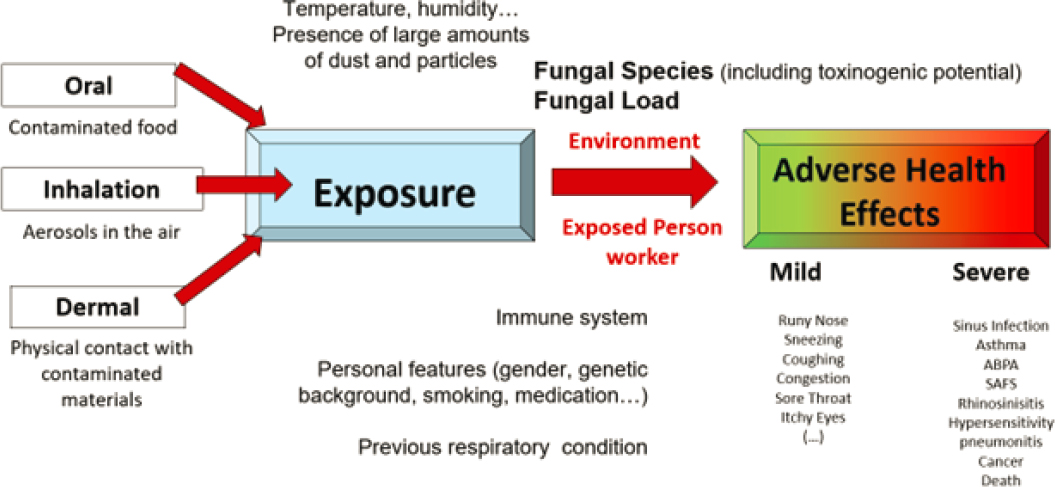
SOURCE: Sabino presentation, June 22, 2022.
immunosuppressant treatments.9 Incidence in the United States and Europe is between 1.1 and 4.6 in 100,000, and trends show an increase in recent years (WHO, 2020). The mortality rate is approximately 50 percent if treated and greater than 99 percent if untreated. Resistant A. fumigatus is identified in 1.5–13 percent of all cases of invasive pulmonary aspergillosis (WHO, 2020).
Occupational Exposure to Resistant Aspergillus
Exposure to airborne Aspergillus spores can occur in the home, hospital, and workplace environments, said Sabino. A study comparing different occupational settings with high Aspergillus spp. loads found that waste-water plants, waste treatment plants, and poultry and swine farms had higher amounts of Aspergillus than other settings included in the study (i.e., cork industry, slaughterhouses, animal feed industry) (Viegas et al., 2017). Furthermore, the waste treatment plants were the most likely setting for fungal contamination to occur. In addition, agricultural settings can expose workers to high amounts of Aspergillus fungal spores, including those from antifungal-resistant isolates. Azole resistance in A. fumigatus has been emerging since 2007, with the presence of pan-azole-resistant isolates being detected in an ever-greater number of countries (Bueid et al., 2010). Concern regarding azole-resistant A. fumigatus has been increasing to the extent that the U.S. Centers for Disease Control and Prevention (CDC) included it on the watch list in their 2019 report on antibiotic resistant threats (CDC, 2019). Additionally, the World Health Organization (WHO) Antifungal Expert Group highlighted A. fumigatus as a priority fungal pathogen (WHO, 2020).
Sabino explained that antifungal resistance in Aspergillus can be classified as either primary or secondary. In primary (i.e., intrinsic) resistance, all organisms of the same species are resistant to a specific antifungal. Secondary (i.e., acquired) resistance occurs when only some isolates of a species are resistant to a specific antifungal. This type of resistance occurs in response to prolonged therapy and prophylaxis with clinical azoles and the usage of agricultural fungicides (Beardsley et al., 2018; Van Der Linden et al., 2011). Thus, workers in agricultural and sawmill settings can be exposed to high levels of environmental azole-resistant isolates. Triazole DMI pesticides are used to protect crops and preserve materials from fungal decay. Although azole fungicides are not used to target A. fumigatus, many DMI fungicides are active against this fungus, which has led to the emergence of resistance. DMIs and clinical antifungals have very similar chemical structures (Kelly
___________________
9 More information about invasive pulmonary aspergillosis is available from http://www.life-worldwide.org/fungal-diseases/invasive-aspergillosis (accessed August 25, 2022).
and Kelly, 2013). This similarity and the ability of fungal spores to disperse easily from crops to other locations via circulating airflows have generated concerns that azole resistance could become a global public health threat.
Resistance Mechanisms in Aspergillus
Azole resistance in A. fumigatus is associated with mutations in the cyp51A gene, said Sabino. This gene encodes an enzyme that is responsible for biosynthesis of ergosterol, which is essential for the viability of the fungal cell. Resistance mechanisms associated with prolonged antifungal therapy and prophylaxis are often identified as point mutations inside the cyp51A gene (Zhang et al., 2017a). These point mutations can be coupled with tandem repeat (TR) integrations—TR34 and TR46—in the gene promotor. These TRs are associated with environmental acquired resistance. Although the environmental link for resistance has not been fully uncovered, there is evidence for a relationship, Sabino stated. This includes the presence of azole-resistant Aspergillus isolates in patients that have not previously been treated with azole antifungals (Snelders et al., 2012; Verweij, Mellado, and Melchers, 2007). Also, the presence of a TR in the promotor of the cyp51A gene is not found in any A. fumigatus isolates that became resistant through patient therapy, but it has been found in azole-resistant phytopathogenic molds. Furthermore, A. fumigatus isolates recovered from the environment are genetically clustered to A. fumigatus isolates featuring TRs found in patients. These are different from wild-type susceptible A. fumigatus isolates. Additionally, medical azole-resistant A. fumigatus isolates are cross-resistant to five triazole fungicides used as pesticides.
Development of Resistant Aspergillus in Agricultural Settings
Sabino explained that inhalation of Aspergillus spores from resistant isolates can automatically render antifungal triazole treatment ineffective and poses the risk of severe health ramifications (Garcia-Rubio et al., 2017) (see Figure 6-3). This gives rise to the question of whether agricultural fungicides induce resistance to clinical azoles. Several studies found this to be the case by demonstrating that isolates exposed to agricultural fungicide develop resistance to clinical antifungals, and those resistant isolates carry the TR34 and TR46 mutations (Faria-Ramos et al., 2014; Ren et al., 2017; Zhang et al., 2017b). An analysis of 52 published studies that detected azole-resistant A. fumigatus in the environment found that the majority of resistant isolates came from agricultural and developed settings (Burks et al., 2021). A large proportion of azole-resistant isolates originated from flowers and specific crops including rice, some cereals, and certain berries. Soil, compost, hair, or plant debris yielded more resistant isolates than other
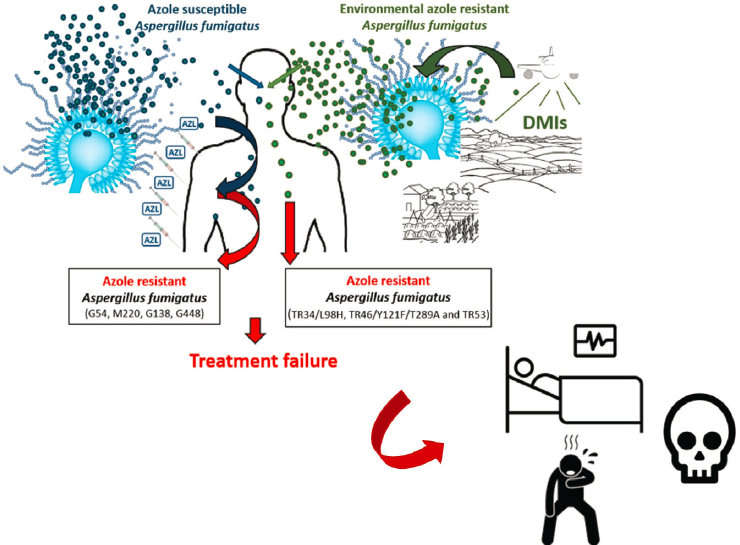
SOURCES: Sabino presentation, June 22, 2022; adapted from (Garcia-Rubio et al., 2017), reprinted with permission from Springer Nature.
substrates. Molecular analysis identified the presence of TR34 and TR46 mutations in 75 percent of these isolates (Burks et al., 2021).
Ecological Resistance Hotspots
Data obtained thus far have brought forth the concept of ecological resistance hotspots, said Sabino (Burks et al., 2021; Schoustra et al., 2019b). These locations feature the physical, biotic, and abiotic conditions to facilitate fungal growth and spread over prolonged time periods, thus allowing the fungi to complete all stages of the growth cycle. Additionally, fungal growth occurs in contact with different azole concentrations sufficient for selection in populations. High quantities of azole-resistant A. fumigatus in agricultural environments, flower gardens, and hospitals could indicate that these settings are potential hotspots, she noted. Studies report the detection of azole-resistant isolates in agricultural environments (Chen et al., 2020), waste sorting plants (Goncalves et al., 2020), and sawmills (Viegas et al., 2022). She described sawmills as an occupational
environment of concern, given that azole fungicides are used to protect spruce and pine fields and are used on milled resinous woods to prevent deterioration due to phytopathogenic fungi.
Sabino stated that fungicide treatments remain essential for maintaining healthy crops with reliable, high-quality yields. Therefore, monitoring is vital in determining whether resistance related to agricultural use is causing challenges in human disease control and whether resistance management strategies are effective. Recognizing potential exposure to antifungal resistance within occupational settings is important in facilitating appropriate health interventions, she added.
DISCUSSION
Extending the Life of Fungicides
Given that antifungal resistance often develops about a decade after market introduction, Goldman asked how this relates to resistance management efforts and whether any tools are available to prolong intervals of efficacy. She added that developments in the field of chemistry are not meeting the pace of resistance. Taylor replied that chemical blending and chemical rotation are vital to maintaining the effectiveness of antifungals. The inclusion of both multisite and single-site chemicals also plays a role. He remarked that mancozeb and chlorothalonil are mainstays of fungal control around the world, yet these multisite antifungals are being withdrawn in many countries. Although DMIs are under pressure from resistance, they have not been rendered completely ineffective. Judicious use that involves blending or rotation with other chemicals can prolong their utility. He added that many farmers who attend Plantwise plant clinics do not want to stray from a practice that is working well. Plantwise works to educate farmers that unless they do change their plant protection treatment plans, these plans will stop working. Furthermore, the effects of antifungal resistance extend beyond the farmer who is not taking preventative measures. Due to the widespread nature of fungi, spores from resistant fungi can travel hundreds or thousands of miles away, affecting other farmers who are using preventative measures. Goldman remarked that individual practices anywhere can affect people everywhere.
Prophylactic Antifungal Usage
Goldman noted her surprise in hearing the extent to which farmers in LMICs are using prophylactic fungicide treatment in the absence of a documented fungus problem. She asked whether it would be possible to have a low-technology tool that could be used to verify the presence of
fungus on samples brought to the plant clinics. Taylor responded that few fungicides have any restorative activity; almost all of them prevent further infection sites but do not address the fungus that has already established itself on plants. Thus, most fungicides are essentially prophylactic in that they work best when placed on clean leaves rather than waiting until a fungus takes hold.
Cost Considerations
Given that pesticides can be expensive, Goldman asked about their widespread use in LMICs. Taylor stated that farmers in LMICs tend to seek the least expensive option. He said he has seen cases of agrochemical dealers selling fake products side-by-side with real products while openly admitting that the cheaper products are fake, and yet they still manage to sell their product. This highlights the importance of price in this market, he added.
U.S. Fungicide Regulation Classification
Goldman remarked that fungicides are regulated as conventional pesticides, even though some pesticides are considered to be antimicrobials. Fungi are microbes; therefore, fungicides can be considered as antimicrobials. She asked Mellor about the implications of EPA’s approach and whether the benefits analysis includes consideration of public health benefits in terms of controlling mycotoxins. Furthermore, she requested he speak to the overlap of a microbe being both a plant pest and a potential pathogen. Mellor replied that the issue of fungicides is emerging at EPA. Most antibiotics for agricultural use are treated as conventional chemicals at EPA, and in-depth analysis is included in the original review for these products. Each time one of these antibiotics is registered for a new use, any changes are reviewed closely. These determinations can be complicated, as future human uses can be difficult to predict. Furthermore, requiring additional data from registrants without these requirements specifically included in the regulations can be problematic. Mellor added that the EPA division that processes antimicrobial registrations has the same FIFRA data requirements as the fungicide branch.
Given that public health issues require the attention of EPA, CDC, and FDA, Goldman asked whether any cross-agency approaches to this issue are being taken. Mellor stated that partner discussions take place for antibiotics involving EPA, CDC, FDA and the U.S. Department of Agriculture. The possibility of convening similar discussions for fungicides is under consideration. He is unsure as to how far that process has moved forward. A determination to replicate efforts regarding antibiotics
for issues around fungicides is possible or an entirely new process may be developed.
Resistance Management Regulation Considerations
In response to a question about the processes that the EPA uses to evaluate and manage the role of fungicides in the development of antifungal resistance, Mellor remarked that EPA issued a pesticide registration notice in 2008 that requires certain language, reviews, and monitoring information to be included on every fungicide label.10 In addition to language requirements, EPA emphasizes the role of rotating fungicides usage based on FRAC groups and modes of action by including this practice in the benefit analysis for new uses, and the agency encourages integrated pest management practices. These factors are all considered during the processes for determining the benefits of a new chemical and reducing risk. A reduced risk classification is applied to certain chemicals, and if a product features a new mode of action, site, or FRAC group, this indicates that it could help resistance management efforts and increases the likelihood of being classified as reduced risk.
Seed Treatments and Genetically Modified Seeds
Goldman asked about the possibility of seed treatment leading to occupational exposure and whether this relates to the use of dust formulations. Furthermore, could genetically modified seeds serve as an alternative to fungicide use on seeds? Mellor replied that seed treatments often do use a dust-type formulation and thereby lead to inhalation exposures for agricultural workers. New scenarios of occupational exposure from seed treatment were presented to EPA; in response, the agency added this factor into risk calculations. EPA adjusts practices when any route of exposure not previously considered comes to the agency’s attention. Mellor specified that this does not necessarily mean that dust formulations will be regulated differently. However, EPA works to ensure that determinations are inclusive of exposures and that exposures are not underestimated. Thus, the agency strives to limit any effects of any product that may contribute to unanticipated health problems. At times, mitigations can reduce exposure risk without prohibiting the seed treatment. For example, requirements can stipulate respirator use or that the product be applied as a broadcast instead
___________________
10 More information about PRN 2008-1: Notice to Manufacturers, Producers, Formulators, and Registrants of Pesticide Products is available at https://www.epa.gov/pesticide-registration/prn-2008-1-notice-manufacturers-producers-formulators-and-registrants (accessed August 12, 2022).
of in seed treatments. Each determination is chemical- and product-specific based on data on exposures and the actual risk to human health. Mellor remarked that he is unsure whether a regulation is in place for genetically modified seeds and, if so, whether EPA would be the regulating agency.
Induction Versus Selection
During the discussion at the end of the day, Sabino was asked how resistance induction is defined and how to differentiate between induction and resistance selection. She replied that a selection case involves a group of genetically different isolates: resistant isolates and susceptible isolates. Under antifungal pressure, positive selection of resistant isolates can occur. In the case of induction, susceptible isolates are exposed to antifungal pressure with sublethal doses. As the fungus tries to survive under those conditions and successfully reproduces, its genetic variability improves, with some isolates presenting mutations that allow the fungus to survive under those conditions.
This page intentionally left blank.


