Nuclear Terrorism: Assessment of U.S. Strategies to Prevent, Counter, and Respond to Weapons of Mass Destruction (2024)
Chapter: 6 The Risks Associated with Highly Enriched Uranium and Plutonium
6
The Risks Associated with Highly Enriched Uranium and Plutonium
Consolidating nuclear weapons and nuclear weapons-usable material to fewer sites is one of the most effective strategies for reducing the risk of nuclear theft. Every facility that eliminates its nuclear weapons, highly-enriched uranium (HEU), or separated plutonium is one less potential target that needs to be protected from theft or sabotage (Bunn, Roth, and Tobey 2019).
Global stocks of civilian and military weapons-usable material are large. As of May 2022, there were approximately 1,250 tons of HEU (+/- ~125) and 550 (+/- ~10) tons of separated plutonium in more than 20 countries. While quantities of HEU are slowly declining, there has been a growth in plutonium stockpiles (International Panel on Fissile Materials 2022a, 2022b). This increase is associated with the reprocessing of spent nuclear fuel by the civilian nuclear energy sector.
There are long-standing gaps in efforts to consolidate weapons-usable nuclear materials. With the notable exception of the Cooperative Threat Reduction efforts with the former Soviet Union, the United States has largely focused on consolidating and minimizing civilian materials. Currently, there is no dedicated program focused on consolidation and minimization of military materials internationally. Additionally, while the United States has supported removal of plutonium from a small number of research facilities, there has been much less focus on consolidating or limiting the growth of larger civilian plutonium stocks.
Of note, the United States has also supported stronger norms on minimization of weapons-usable nuclear material at the multilateral level. In 2016, the United States joined nearly two dozen countries in committing to concrete steps to consolidate HEU, curtail its use in the civil sector, and report inventories (Nuclear Security Summit 2016). The commitment has been formalized and opened to all states as International Atomic Energy Agency (IAEA) Information Circular 912 (INFCIRC/912). Unfortunately, only two countries have followed through on their INFCIRC/912 commitments by releasing
BOX 6-1
Summary
Since the end of the Nuclear Security Summit process in 2016, there has been a gradual slowing of efforts to eliminate excess civilian stockpiles of highly enriched uranium (HEU) and separated plutonium. While the inventories of HEU have declined slightly, since 2020, the inventories of separated civil plutonium have increased by more than 17,000 kilograms. Non-state actors, both domestic and international, currently lack the technical ability to create these materials. However, given the interest by some in obtaining them, it should be a top national security priority to eliminate these materials wherever possible, and better secure those materials that remain by the 22 countries that possess them.
Highlights
- Efforts to eliminate, reduce, and secure the most dangerous civilian special nuclear materials must be prioritized as a national security objective.
- Stored amounts of highly enriched uranium have been reduced over the past 15 years, and efforts should be redoubled to further reduce excess HEU globally.
- Separated plutonium remains a concern as inventories are increasing. Safe and secure storage of nuclear materials (including HEU) at the highest standard remains challenging.
- Plutonium should not be used as a fuel source in the expanding civilian nuclear energy sector.
information about their civilian HEU quantities (International Atomic Energy Agency 2020).
6.1 SPECIAL NUCLEAR MATERIAL
Special nuclear materials, specifically HEU and separated plutonium, are the primary ingredients for a nuclear weapon. Because these are manmade, significant industrial facilities and scientific expertise are required to manufacture these materials to produce them in high quantities.1 Constructing and operating these facilities are outside the reach of non-state actors. If a non-state actor was able to gain access to already manufactured HEU, however, the scientific expertise to make a crude improvised nuclear device (IND) may be within the reach of a group intent on carrying out
___________________
1 Fortunately, this material largely does not exist in nature, but the committee notes there is one well-known source of plutonium reported in the research literature (Krieger 2004).
a terrorist attack (Bunn and Wier 2006). Any such event would have profound global repercussions, ranging from the direct damages to the location where the detonation occurred to cascading economic and psychological consequences as nations struggle to reassure their publics throughout the response and recovery from such an incident. With today’s pervasive social media, any response and recovery efforts would no doubt be carried out in an environment of considerable misinformation and disinformation. For the civil nuclear sector, an IND attack may reverse or even halt the expected expansion of nuclear energy to help combat global warming. As such, the focus for government efforts has been and should continue to be on the elimination of as much special nuclear material as possible. As noted earlier in this report, multiple terrorist organizations have sought weapons of mass destruction, including nuclear and radiological weapons. With an increase in the range of ideologies interested in creating mass chaos and with some religious groups committed to apocalyptic goals, protecting and securing weapons-quality materials must be an urgent priority for governments around the world. Every country has a role to play.
6.1.1 Highly Enriched Uranium
FINDING 6-1: Acquiring sufficient quantities of HEU is the most difficult step in constructing an IND. Protecting and minimizing this material is the cornerstone of the NNSA mission in preventing nuclear terrorism. Further reductions could be realized in partnerships with those countries with excess HEU.
Prior to 2020, there was a significant reduction in the use of HEU in the civilian sector (Table 6.1). With the removal of all HEU from Nigeria in 2018, 32 countries plus Taiwan have removed all such material from their territories (National Nuclear Security Administration 2018). Overall, more than 7,000 kilograms of special nuclear materials have been removed from over 100 facilities. However, more work remains to be done as there are still 22 countries that possess at least 1 kilogram of HEU or separated plutonium. The IAEA notes that as little as 25 kilograms of HEU would be sufficient to create a nuclear device.
The United States has been the most active country in encouraging other countries to eliminate their stocks of special nuclear material. Initial DOE/NNSA programs included the Materials Consolidation and Conversion program. The aim on this effort was to consolidate and down-blend Russian highly enriched uranium. Additionally, a dedicated U.S. program to convert the remaining research reactors, domestic and international, from HEU fuel to low enriched uranium (LEU) fuels has made impressive scientific progress in the development of new LEU fuels. A 20+ year effort with Russia to repatriate Russian-origin HEU from third countries was very successful.2 Another U.S. program is focused on removing excess HEU from reactors in countries across the globe and repatriating it to the country where that material originated. This work
___________________
2 Russia is no longer participating in this program.
TABLE 6-1. Countries That Have Eliminated Weapons-Usable Nuclear Material
| Year | Country or Territory | (cont.) | |
|---|---|---|---|
| 1992 | Iraq | 2009 | Libya, Romania, Taiwan |
| 1996 | Columbia | 2010 | Chile, Serbia |
| 1997 | Spain | 2012 | Mexico, Ukraine, Sweden, Austria |
| 1998 | Denmark | 2013 | The Czech Republic, Vietnam |
| 1999 | Thailand, Slovenia, Brazil, Philippines | 2015 | Hungary, Jamaica, Uzbekistan, Georgia |
| 2005 | Greece | 2016 | Argentina, Indonesia, Poland |
| 2007 | South Korea | 2017 | Ghana |
| 2008 | Latvia, Bulgaria | 2018 | Nigeria |
SOURCE: Table 1, p. 70, in Bunn, Matthew; Roth, Nickolas; and Tobey, William H. Revitalizing Nuclear Security in an Era of Uncertainty. Report. Harvard Kennedy School of Government. Belfer Center for Science and International Affairs. January, 2019.
was accelerated during the Obama Administration’s Nuclear Security Summits, which provided important high-level impetus to complete this work.
Norway has also provided important leadership through its efforts to strengthen international norms on the non-use of HEU in civilian applications. It has hosted three HEU Minimization Symposiums, the most recent taking place in 2018 (Arms Control Association 2018). Further, Norway sponsored an IAEA Information Circular in 2017 where countries commit to reduce their stocks of HEU and provide regular reporting on the current inventory of material. Norway is also taking steps to dispose of its modest stockpile of HEU in the coming years.
More work can be done to reduce and eliminate HEU from civilian applications globally. Approximately 85 facilities are still operating using HEU, with 56 located in Russia alone. There are several countries, including South Africa and Belarus, where there are hundreds of kilograms of excess HEU that could be eliminated. There are serious political, economic, and technical challenges that need to be confronted, but with strong U.S. leadership generating the necessary political will, these can be overcome by the global community.
6.1.2 Plutonium
FINDING 6-2: Inventories of separated plutonium are increasing worldwide, elevating the amount of materials that could potentially find their way to proliferant states or non-state actors.
In stark contrast to the work done to reduce HEU, there has not yet been a concerted effort to reduce civilian stockpiles of separated plutonium. Over the past 10 years, based on reporting to the IAEA, the world has seen an increase in separated plutonium of 51
metric tons, bringing the total inventories to a staggering 371 metric tons. Using the IAEA assessment that only 8 kilograms of separated plutonium are required to make a nuclear device, that is enough to make more than 46,000 nuclear devices.
There is a different dynamic at play with stockpiles of separated plutonium. Instead of it being used for scientific experiments, certain countries have chosen to use plutonium in nuclear reactor fuel. In particular, five of the 31 countries with active nuclear programs have gone this route: China, France, India, Japan, and Russia. By using this type of fuel cycle, a country must reprocess spent fuel to acquire the plutonium for the fuel (or contract with another country to do so). This is the same process that a country would pursue to acquire plutonium for nuclear weapons. Therefore, the fewer countries that reprocess spent fuel, the fewer countries there will be to have the capacity to create nuclear material for a nuclear weapon. Given that 26 countries have demonstrated that they can forego using separated plutonium as a source of nuclear energy, it should be possible for other countries do so as well.
The technical capabilities exist to eliminate special nuclear materials in several countries around the world. In the case of unirradiated HEU, this material can be down-blended into LEU and then used as fuel for nuclear energy.
Irradiated HEU and plutonium are more difficult to dispose of, given the high levels of radiation. Efforts to identify long-term solutions for dispositioning these materials, as well as spent fuel in general, have floundered in the case of Yucca Mountain in the United States. A few countries in Europe—including Finland and Sweden—have made recent progress on commissioning a long-term repository for such materials (i.e., spent fuel), but more progress is needed, especially given the expected expansion of civil nuclear energy to help combat climate change.
6.2 SECURITY OF NUCLEAR MATERIALS
In locations where civilian stocks of special nuclear materials remain, implementing robust nuclear security measures must be a priority. This includes advancing a variety of measures that help to protect the facilities where the nuclear materials are stored, account for the inventories of nuclear materials to support detection of possible diversion, and respond to insider attempts to steal these materials or forcible entry attempts to obtain them. Underpinning these measures must be a strong nuclear security culture where employees remain vigilant to the threats posed to their facilities.
The contemporary challenges for securing excess nuclear materials are much different from those faced in the immediate aftermath of the fall of the Soviet Union. Some have argued for a new international framework to guide how to manage these materials in the long run (Nunn and Holgate 2021). But global nuclear security can only be strengthened if countries work on a peer-to-peer level to secure and manage these materials they are not able to eliminate. Equally important is developing safeguards and security measures that take into account technology advances, such as artificial intelligence, and how these technologies can both help protect and potentially be exploited by adversaries to access these materials.
6.2.1 2023 Nuclear Security Index
FINDING 6-3: Excess nuclear materials have not been secured to the highest standard and consolidated to as few locations as possible.
Despite the United States’ role in strengthening nuclear security around the world, significant vulnerabilities remain at nuclear sites and within the international institutions and legal frameworks that support nuclear security. The Nuclear Threat Initiative’s 2023 Nuclear Security Index, which is the most comprehensive public quantitative assessment of nuclear security conditions in 175 countries and Taiwan, found that, since 2020, nuclear security has been regressing in “countries and areas with the greatest responsibility for preventing nuclear theft and sabotage—those with nuclear materials and facilities” (Nuclear Threat Initiative 2023). The study warns about the dangers of rapidly growing stocks of separated plutonium as a result of commercial reprocessing; insufficient progress strengthening security culture and insider threat prevention programs in countries with weapons-usable nuclear materials and nuclear facilities; and faltering support for new commitments and assurances that increase international confidence in the effectiveness of nuclear security.
The report also highlights long-standing gaps in nuclear security around the world. Among the 46 countries and Taiwan with nuclear facilities, 25 have no regulations or licensing conditions that require personnel to report suspicious behavior; 31 do not require drug testing, background checks, and psychological and mental fitness checks for personnel; and 17 do not have regulations that require the use of a regularly updated design basis threat. Particularly alarming in this new era of evolving risks is the report finding that 16 of the 46 countries and Taiwan with nuclear facilities do not require plans for protecting nuclear infrastructure during a natural or human-caused disaster.
The United States has now entered a new era where dangerous new risks are intersecting with long-standing vulnerabilities. For decades, U.S. leadership has led to stronger nuclear security internationally. This leadership is now more important than ever as countries respond to rapidly evolving nuclear security threats and challenges to nuclear security operations.
RECOMMENDATION 6-1: The United States should prioritize the effort to secure, and wherever practical, consolidate or eliminate civilian special nuclear materials and treat it as a core national security objective. This includes leading efforts to transform perspectives on the use of plutonium for nuclear energy production.
The United States has a long-standing record of providing the essential leadership for addressing the risks associated with nuclear terrorism. However, in the years since the Nuclear Security Summits ended in 2016, the United States has been increasingly prioritizing regional considerations, which has, at times, come at the expense of following through on key international nuclear security activities. President Biden’s release of National Security Memorandum 19 (NSM 19), which outlines the Administration’s
strategy to counter weapons of mass destruction terrorism, expresses a commitment to reprioritize these global activities as vital to U.S. national security (The White House 2023).
Beyond the important actions outlined in NSM 19, there are additional steps the U.S. government can take to reassert its leadership role. The United States has unique facilities that are able to dispose of special nuclear materials. These facilities should be fully harnessed to repatriate these materials for disposal before they reach the end of their useful life. This will require a focused effort to strengthen international cooperation on addressing this issue.
There is important domestic work to be done as well. There are many metric tons of excess civilian HEU and separated plutonium in the United States that should be eliminated as soon as possible. In instances where these materials are needed, security measures should be evaluated against the existing threat environment for any needed enhancements. Given the growing domestic terrorism challenge and continued evidence of non-state actor interest in weapons of mass destruction, this should include updating insider threat mitigation programs.
Looking to the future, the United States should not start new civilian facilities or activities that utilize HEU, if there are alternative technologies that can be used to achieve the same goals. This is key to safeguarding U.S. credibility in leading international efforts to reduce the amount of HEU material other countries are using. Further, a nonproliferation impact assessment should be required whenever the use of HEU or plutonium is being considered. Similarly, for the potential use of HEU in space applications, there should be assessments that consider nonproliferation concerns in the development of those assets. Reducing the quantities of these materials will also result in long-term cost savings on security measures required to protect them (Bunn and Harrell 2012).
The United States has had a well-established commitment to HEU minimization in support of nonproliferation. Recently, DOE has provided funding to start a new experimental HEU-fueled facility at Idaho National Laboratory (INL) known as the Molten Chloride Reactor Experiment (Kramer 2023). While this experiment will utilize existing stockpiles of HEU from a prior research reactor that ran at INL from 1969 to 1990 and will allow the DOE to collect the desired data at reduced cost and scale, it will, nevertheless, mark the first time in more than ten years where a country has begun a civilian activity utilizing HEU (Idaho National Laboratory 2023; Office of NEPA Policy and Compliance 2023). There was no official review of the nonproliferation impact of this project, even though it has implications for U.S. leadership on nonproliferation efforts abroad.
6.2.3 Proliferation Concerns and Nuclear Fuel Cycles
Given the increasing quantities of separated plutonium, a new approach is needed to reduce the risk associated with fissile material. In countries with nuclear energy programs that utilize a plutonium fuel cycle, the conversation focuses on how best to manage these materials. The right approach to pursue is advancing efforts to reduce the
attractiveness of these materials by reducing the stockpiles and physically protecting and safeguarding materials so that they cannot be weaponized. From there, countries can prioritize better balancing the supply and demand of plutonium so that it is reduced over time.
Although this committee did not undertake an independent review and validation of proliferation concerns with fuel cycles and developments in nuclear energy, similar and parallel concerns were examined in the National Academies’ study “Merits and Viability of Different Nuclear Fuel Cycles and Technology Options and the Waste Aspects of Advanced Nuclear Reactors” (National Academies of Sciences 2023). This report concluded that all advanced reactor fuel cycles will necessitate stringent safeguards and security measures that align with the potential risks they present. There are particular issues with fuel cycles involving the reprocessing and separation of fissile materials. These pose more significant risks in terms of proliferation and terrorism compared to the once-through uranium fuel cycle, where spent fuel is directly disposed. The concern is that separated fissile materials from reprocessing would not be uniformly mixed with highly radioactive fission products and could potentially be used in weapons. The materials that could be separated and potentially used in weapons might include fissionable materials other than the conventional special nuclear materials, HEU and plutonium. Consequently, closed fuel cycles of this nature will likely necessitate specific safeguard technologies to fulfill the IAEA’s objective of prompt detection and monitoring.
The National Academies report stated that “the U.S. government should support the IAEA’s development and application of effective safeguards for advanced reactor technologies by authorizing, via the U.S. interagency process, IAEA access through the eligible facilities list, especially to those advanced reactor systems for which the IAEA does not currently have safeguards experience. Developers of these types of advanced reactors and fuel cycle facilities should provide facility information to the IAEA to help with integration of safeguards considerations into the design process.” (National Academies of Sciences 2023, pp. 13 and 183) Additionally, the NRC ought to address security and material accounting measures for high-assay low-enriched uranium and other attractive nuclear materials that may be present in advanced reactor fuel cycles.
Action on the findings and recommendations from the study “Merits and Viability of Different Nuclear Fuel Cycles and Technology Options and the Waste Aspects of Advanced Nuclear Reactors” on nonproliferation and security risks with nuclear material would address and ameliorate concerns of nuclear terrorism related to separated materials.
To summarize, countries exploring the possibility of utilizing nuclear energy to combat climate change need to avoid options that include separation or use of plutonium and put in place plans for long-term management of spent nuclear fuel.
References
Arms Control Association. 2018. “Remarks: Reducing Stocks of Highly Enriched Uranium.” Arms Control Today. https://www.armscontrol.org/act/2018-07/features/remarks-reducing-stocks-highly-enriched-uranium.
Bidgood, Sarah, and William C. Potter. 2021. End of an Era. The United States, Russia, and Nuclear Nonproliferation. James Martin Center for Nonproliferation Studies, Middlebury Institute of International Studies.
Bunn, Matthew, and Eben Harrell. 2012. “Consolidation: Thwarting Nuclear Theft.” Project on Managing the Atom. https://www.belfercenter.org/sites/default/files/legacy/files/Consolidation_Thwarting_Nuclear_Theft_corrected.pdf.
Bunn, Matthew, Nickolas Roth, and William H. Tobey. 2019. “Revitalizing Nuclear Security in an Era of Uncertainty.” Project on Managing the Atom. https://www.belfercenter.org/publication/revitalizing-nuclear-security-era-uncertainty.
Bunn, Matthew, and Anthony Wier. 2006. “Terrorist Nuclear Weapon Construction: How Difficult?” The Annals of the American Academy of Political and Social Science 607: 133–149. http://www.jstor.org/stable/25097844.
Idaho National Laboratory. 2023. Molten Salt Reactors. https://inl.gov/document/molten-salt-reactors/ Accessed August 17, 2023.
International Atomic Energy Agency. 2020. “Communication Dated 23 January 2020 Received from the Permanent Mission of Australia Concerning the Joint Statement on Minimising and Eliminating the Use of Highly Enriched Uranium in Civilian Applications.” INFCIRC/912/Add.4. https://www.iaea.org/sites/default/files/publications/documents/infcircs/2017/infcirc912a4.pdf.
International Panel on Fissile Materials. 2022a. “Materials: Highly Enriched Uranium.” https://fissilematerials.org/materials/heu.html.
—. 2022b. “Materials: Plutonium.” https://fissilematerials.org/materials/plutonium.html.
Kramer, D. 2023. “Idaho Reactor Project Plans to Use Bomb-Grade Uranium” FYI: Science Policy News. https://ww2.aip.org/fyi/2023/idaho-reactor-project-plans-use-bomb-grade-uranium
Krieger, Kim. 2004. “Natural Nuclear Reactor Explained.” Science. https://doi.org/10.1126/article.34941. https://www.science.org/content/article/natural-nuclear-reactor-explained.
National Academies of Sciences, Engineering, Medicine. 2023. Merits and Viability of Different Nuclear Fuel Cycles and Technology Options and the Waste Aspects of Advanced Nuclear Reactors. Washington, DC: The National Academies Press.
National Nuclear Security Administration. 2018. NNSA Removes All Highly Enriched Uranium from Nigeria.
Nuclear Security Summit. 2016. “NSS 2016: Gift Basket on Minimizing and Eliminating the Use of Highly Enriched Uranium in Civilian Applications.” Joint Statement on HEU Minimization. http://www.nss2016.org/document-center-docs/2016/4/1/joint-statement-on-heu-minimization-gb.
Nuclear Threat Initiative. 2023. NTI Nuclear Security Index: Falling Short in a Dangerous World. In NTI Nuclear Security Index https://www.ntiindex.org/wp-content/uploads/2023/07/2023_NTI-Index_Report.pdf.
Nunn, Sam, and Laura S. H. Holgate. 2021. “Cooperative Risk Management and Reduction: A New Framework for Nuclear Materials Security.” https://www.nti.org/analysis/articles/cooperative-risk-management-and-reduction-a-new-framework-for-nuclear-materials-security/.
Office of NEPA Policy and Compliance. 2023. “DOE/EA-2209: Molten Chloride Reactor Experiment (MCRE) Project; Idaho Falls, ID.” Department of Energy. https://www.energy.gov/nepa/doeea-2209-molten-chloride-reactor-experiment-mcre-project-idaho-falls-id.
The White House. 2023. “Fact Sheet: President Biden Signs National Security Memorandum to Counter Weapons of Mass Destruction Terrorism and Advance Nuclear and Radioactive Material Security. https://www.whitehouse.gov/briefing-room/statements-releases/2023/03/02/fact-sheet-president-biden-signs-national-security-memorandum-to-counter-weapons-of-mass-destruction-terrorism-and-advance-nuclear-and-radioactive-material-security/
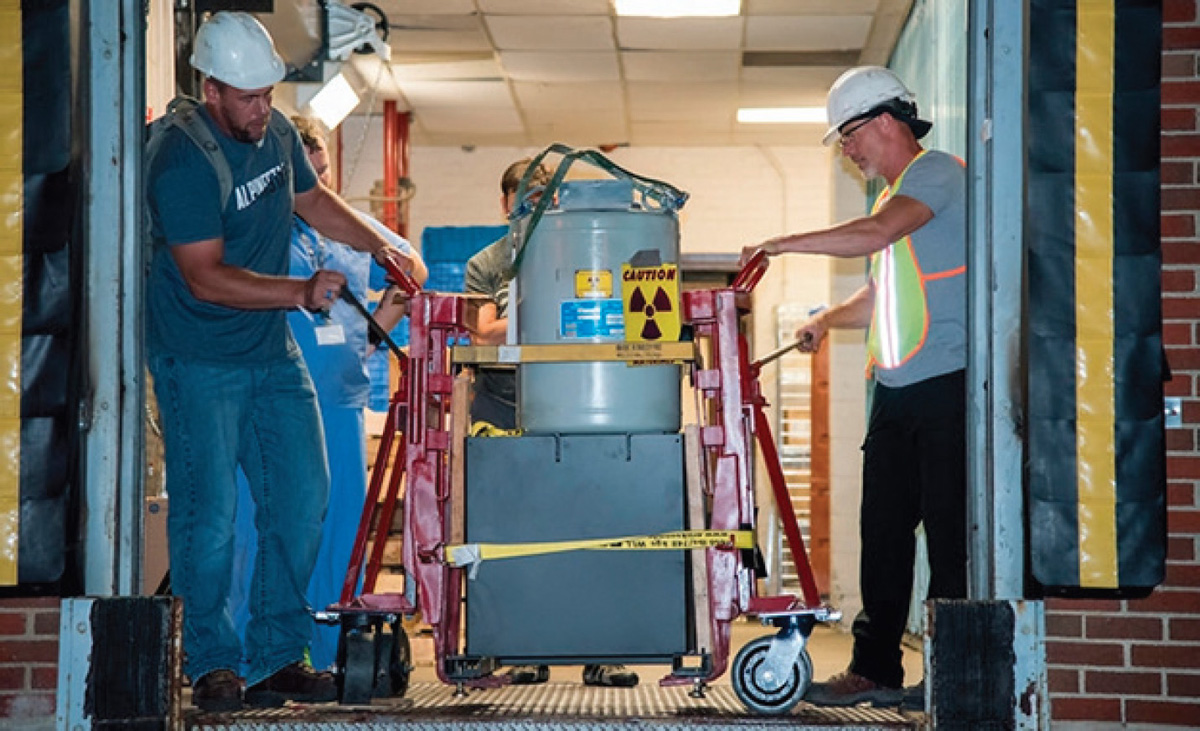
SOURCE: Image NNSA, https://www.aip.org/fyi/2021/final-fy21-appropriations-national-nuclear-security-administration.


