Summary
“They were conquerors, and for that you want only brute force—nothing to boast of, when you have it, since your strength is just an accident arising from the weakness of others. They grabbed what they could get for the sake of what was to be got. It was just robbery with violence, aggravated murder on a great scale, and men going at it blind—as is very proper for those who tackle a darkness.”
— Joseph Conrad, Heart of Darkness
This quote from Joseph Conrad’s Heart of Darkness offers a chilling insight about the nuclear terrorism threat. A terrorist organization that gains possession of a nuclear weapon or nuclear materials would have the “strength” to take advantage of “the weakness of others”—the vulnerability of societies to a nuclear or radiological attack—resulting in “murder on a great scale.”
When the Soviet Union collapsed in 1991, there was a significant risk that nuclear material and potentially even nuclear weapons might fall into the hands of non-state actors. To prevent this from happening, the United States took the extraordinary step to assist its Cold War adversary in securing nuclear weapons and weapons-usable material. This program, the Cooperative Threat Reduction (CTR) program, also known as the Nunn-Lugar program after its congressional cosponsors, former senators Sam Nunn (D-GA) and Richard Lugar (R-IN), was a bipartisan, multi-decade effort with Russia that made an important contribution to reducing the risk of nuclear and other forms of weapon of mass destruction (WMD) terrorism.
The attacks on New York and Washington by Al Qaeda on September 11, 2001, heightened the concern that weapons of mass destruction could be used by terrorist organizations. A bipartisan commission was charged by Congress to investigate the 9/11 attacks and make recommendations to bolster U.S. counterterrorism capabilities. The resulting 9/11 Commission Report helped guide efforts that have made it possible for
a new generation of Americans to grow up without experiencing another catastrophic terrorist attack on the U.S. homeland, including an act of nuclear terrorism.
The nation’s success to date in countering nuclear terrorism does not come with a guarantee. Success often carries the downside risk that other challenges will begin to syphon away attention and resources, and it can lead to the perception that the threat is no longer a real threat. This reality underpins Congress’s decision to direct the National Academies to study whether the capabilities are still in place to keep the United States safe in the face of an evolving nuclear terrorism threat. This report is the response to that mandate and examines the status of programs and activities across the U.S. government to prevent, counter, and respond to and recover from nuclear terrorism. The report also examines state and local capacity for dealing with a nuclear incident.
A key challenge identified by the study committee is the need to ensure ongoing coordination and collaboration within and among all federal departments and agencies who bring their unique capabilities and authorities to the overall counterterrorism mission. There are strong and effective programs within a number of federal agencies staffed by experts who bring years of experience to the mission. Senior officials at the various departments and agencies work to ensure that their important domestic and international programs and capabilities are adequately funded, staffed and adapted to the evolving terrorism threat. But with no one agency assigned a lead role, it falls to the White House to provide sustained oversight to minimize duplication of efforts and to ensure close interagency coordination and focus.
As important as well-coordinated and sustained efforts are at the federal level, the committee recognizes that state and local responders will most likely be first on the scene of a nuclear terrorism event. In many instances, however, the necessary knowledge and capabilities do not exist at the state and local levels or are not exercised. Additional funding and collaboration are needed to deepen coordination among federal, state, and local government; tribal and territorial leaders; public and private universities and colleges; and other entities. New technologies and capabilities will be needed to address the evolving threat, making it essential to pursue cutting-edge research to support the mission and to grow a new generation of professionals. As in the past, philanthropy and major foundations can also play a vital role by supporting relevant work undertaken by research and policy institutes.
RECOMMENDATION: The U.S. government should maintain as a strategic priority the post-9/11 focus and effort on combating terrorism through ongoing deep collaboration and coordination across the national security community in addition to international partners; state, local, tribal, and territorial (SLTT) authorities; the national laboratories; universities and colleges; and civil society, and ensure that senior leaders at key agencies stay engaged in the counterterrorism mission.
STUDY APPROACH
The committee spent 18 months studying the means, methods, and probabilities of nuclear terrorism in response to Congress’s direction to assess the adequacy of U.S. strategies to prevent, counter, and respond to nuclear terrorism. The committee was also asked to identify and provide recommendations to close any technical, policy, or resource gaps. The committee took a phased approach to the study in which it first held meetings with academic, nongovernmental, industry, and international partners. These sessions helped the committee identify the key topics on which the study should focus. These sessions guided subsequent requests for presentations from senior U.S. officials, including the review of relevant classified programs and information. The data-gathering phase was structured to understand current practices, challenges, and response needs associated with nuclear weapons, nuclear and radiological materials, and counterterrorism. The study also drew on the breadth and depth of expertise and experience of the committee’s members, peer-reviewed literature, research institute reports, and investigative journalism.
The report is written to inform Congress and reach the widest possible audience, and it contains 38 findings and 16 recommendations. A classified annex contains data derived from classified sources and provides further support for the findings and recommendations found in this report.
CURRENT AND EMERGING NUCLEAR TERRORIST THREATS
Nuclear terrorist threats are generally categorized as the intentional detonation of a state-developed nuclear weapon, an improvised nuclear device (IND) assembled with stolen weapons-usable fissile material, radiological dispersal devices (RDD), radiological exposure devices (RED), or the threat to use a nuclear weapon, IND, RDD, or RED. These threats can also include attacks on nuclear facilities, including nuclear power plants.
The radiological materials in commercial and industrial applications could be used to produce a dirty bomb or exposure device. Such a device would be less destructive than a nuclear bomb or an IND, but the materials are more available and easier to obtain. Given the lower barrier for accessing these materials, a dirty bomb is more likely to be used by terrorists than a nuclear weapon or improvised nuclear device. While the risk to lives is dramatically lower than for a nuclear weapon, if an RDD is successfully exploded, it would have significant economic consequences and cause public fear and uncertainty. An RED is a more insidious weapon as it would passively expose passers-by to radiation and could go undetected for some time.
The key to preventing nuclear terrorism is to deny access to a weapon, the material, or the facility. The second line of defense is detecting and recapturing the weapons or materials, should a terrorist organization get hold of them. Since prevention efforts may not always succeed, it is also important to have in place contingencies and capabilities to deal with a nuclear or radiological device, should it be detected or used. Having the means to attribute ownership of the device will also have a deterrent effect. Counter-
ing nuclear terrorism also includes developing the means to deal with cyberattacks and managing the emerging risks associated with artificial intelligence and the use of misinformation, disinformation, and mal-information (MDM).
MDM is a particularly vexing issue that could compound the catastrophic consequences of a nuclear incident by complicating public communications, thereby impeding the emergency response and recovery efforts. MDM can be spread via many platforms, including news media or social media posts. Nation-state adversaries have used MDM to amplify extremist ideologies, to cast doubt on official narratives, amplify political discord, spark confusion, and promote favorable narratives surrounding themselves, their allies, nonaligned countries, or certain domestic actors. Given the open and widespread nature of social media, MDM could also be used by terrorists, including nuclear terrorists, to intentionally spread false information during a nuclear incident to confuse the public about what actions they should take to stay safe. Even poorly designed disinformation campaigns could impact confidence in government institutions, reputable journalistic outlets, and “other staples in democracy” (Wolters et al. 2021), making it an extremely useful tool for nuclear terrorists.
RECOMMENDATION: The Department of Homeland Security, with support from the Centers for Disease Control and Prevention, the National Governors Association, and the U.S. Conference of Mayors, should undertake a multipronged effort involving all levels of government (federal, state, local, tribal, and territorial) to include research and educational entities, civic associations, and media to raise public awareness and understanding of how information can be used to confuse, mislead, and deceive during major crises.
NEW DYNAMICS IN NUCLEAR TERRORISM POSE NEW RISKS
The committee does not foresee an imminent nuclear terrorist attack with a nuclear weapon or an IND. Nevertheless, the number and types of groups that may be motivated to use INDs, RDDs, or REDs is likely growing (Earnhardt, Hyatt, and Roth 2021). While some non-state actors may be deterred by the near-certainty of attribution and retribution, others, including millenarian groups such as ISIS and U.S.-based accelerationist groups, actively court retaliation to spark a wider war or to realize apocalyptic beliefs.
Nuclear weapons, weapons-usable fissile materials, and nuclear weapons design expertise are almost entirely controlled by state actors. This means that in order for a terrorist organization to carry out a nuclear attack with either a nuclear weapon or an improvised nuclear device, they would need the complicity of a state, the failure of the state’s controls, or the failure of the state itself. As the national security and intelligence communities shift focus from terrorism to great power competition, there is danger that there will be less capability and capacity for early detection and for mobilizing a timely counterterrorism response to a non-state actor that obtains a nuclear weapon or weapons-usable fissile materials.
Importantly, terrorism is not exclusively an international or domestic threat but increasingly is a transnational one (Hoffman and Ware 2023). A particularly troubling
development is the existence of U.S.-based accelerationist groups that have been deliberately recruiting U.S. military personnel. Additionally, there are disturbing and growing U.S. domestic links with mercenary and terrorist groups across international borders.
Another worrisome development with respect to terrorism is the extent to which technical information can be obtained online, and this could encourage groups to seek nuclear material. Additionally, extremists are utilizing social media to fuel radicalization and extreme partisanship, as well as to propagate dis- and misinformation and sow mistrust of government institutions and authoritative information. Social media is serving as a powerful organizational tool for terrorist groups, facilitating an increase in international connectivity among domestic and foreign terrorist organizations.
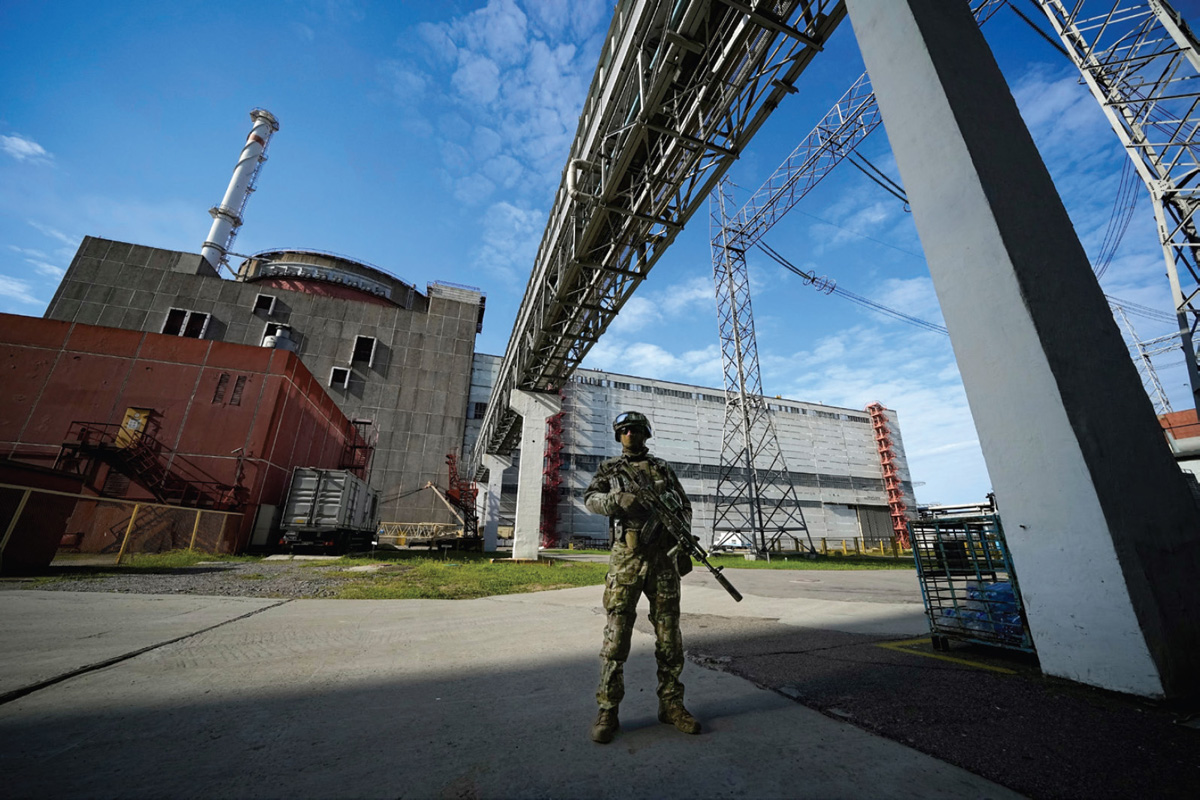
The risk of nuclear terrorism must also be evaluated in the context of changing norms associated with nuclear weapons and civil nuclear power. There have been cyberattacks on operating nuclear power plants in India, Japan, and South Korea. Russia has demonstrated a willingness to defy international norms, not only by attacking and occupying Ukraine’s operating civilian nuclear power plants but also by employing proxies with a history of war crimes, deploying operatives to attack and poison individuals with advanced nerve agents and radiological substances, and threatening to use nuclear weapons.
In sum, managing the threat of nuclear and radiological terrorism will be challenged by the continued prevalence of groups operating both domestically and overseas who are motivated to carry out these kinds of attacks. State actors could potentially collaborate with terrorist groups, providing them the capability to conduct such attacks. As this threat landscape continues to evolve, the pressure of other national security challenges associated with great power competition along with resource constraints will make it difficult for the national defense and intelligence communities to sustain current levels of effort for managing the nuclear terrorism risk.
RECOMMENDATIONS:
- The blurring of boundaries between state and non-state adversaries, such as the Wagner Group, Hamas, Hezbollah, and ISIS raises the possibility that there may be gaps in U.S. government efforts to address nuclear threats. The committee recommends that the National Security Council and the Office of Management and Budget conduct a review of counterterrorism programs and agency budgets across the national security community to ensure that the attention being directed to great power competition does not result in underinvesting in essential capabilities for managing and responding to the nuclear terrorism risk.
- The transnational links among some anti-government/terrorist groups operating in the United States suggest that some of these groups might meet the criteria to be included on the list of Foreign Terrorist Organizations, which would make it illegal not only to join these groups but also to financially support them, as is the case for other listed FTOs. The Committee recommends the Departments of State, Treasury, Justice, Defense, and other relevant agencies examine these relationships and links to under-
- stand any such international connections and determine if any additional organizations are appropriate to add to this listing.
- To address the risk of radicalization by individuals who hold U.S. security clearances, the Administration should include the Department of Defense’s revised definitions of “extremist activities” and “active participation,” as described in The Report on Countering Extremist Activity within the Department of Defense, in the investigative standards for all government workers and contractors who have access to sensitive information and facilities as part of Executive Order 13764 of January 17, 2017, and as a part of the U.S. continuous vetting process.
GEOPOLITICAL AND OTHER CHANGES ERODING LONG-STANDING NUCLEAR SECURITY NORMS AND PRACTICES
A unifying theme in this report is the indispensable role that the United States has played and must continue to play in mobilizing and sustaining global efforts to advance nuclear security. Renewed attention to this imperative is especially important given the erosion of many of the post–Cold War conditions that have supported international cooperation for reducing the risk of nuclear terrorism. Most prominent among these is Russia’s shift from being an important partner in enhancing nuclear security to a destabilizer of nuclear norms following its full-scale invasion of Ukraine in 2022. This includes the Russian threat of using nuclear weapons to intimidate Ukraine and those countries providing assistance. A destabilizing outcome of this behavior has been the steady erosion of nonproliferation efforts by demonstrating the potential usefulness of nuclear weapons. Given this new reality, there must be continued strong U.S.-led efforts to adapt and expand the international programs that have to date prevented a successful terrorist nuclear attack and to discourage non-weapons states from acquiring nuclear weapons.
For three decades, the cornerstone of managing the nuclear terrorism threat has been limiting the number of nuclear weapons and the availability of weapons-usable nuclear materials that may potentially fall into the hands of non-state actors. In recent years, however, the global partnerships in support of arms control, nonproliferation, and combating nuclear terrorism are no longer robust.
The Nuclear Security Summit process that mobilized and focused international attention on the need to manage the risk of nuclear weapons and materials ended in 2016 (Gill 2020; Bunn 2016). Meanwhile, China and North Korea continue to expand their nuclear weapons programs, fueling the anxieties of other countries in Asia. Should the long-standing tensions between the neighboring states of Pakistan and India boil over, the fact that both states have significant and growing stocks of nuclear weapons and materials is a major concern. Iran is producing highly enriched uranium, possibly weapon usable (International Atomic Energy Agency 2023; Murphy 2023). This could stimulate interest in enrichment in other countries in the Middle East (Cordesman 2021; Lerner 2022).
Given this dynamic threat environment, there is an urgent need for the United States to reinvigorate efforts to engage heads of states and governments to work together to close any existing and emerging gaps in the international nuclear security system. Additionally, U.S. proliferation prevention programs carried out in cooperation with intergovernmental organizations like the International Atomic Energy Agency (IAEA) and Interpol, as well as with like-minded countries, require increased funding and coordination. It is clear that the current patchwork of limited bilateral and multilateral activities must be expanded, strengthened, and fully funded to manage the evolving nuclear terrorism risk.
RECOMMENDATIONS:
- Based on the Biden Administration’s recently released Strategy for Countering Weapons of Mass Destruction Terrorism (NSM-19), the U.S. government, led by the National Security Council, should continue to prioritize and provide oversight of a “whole of government” / “whole of nation” focus on preventing nuclear terrorism to include strengthening and extending ongoing nonproliferation and counterproliferation programs.
- Combating the threat of nuclear terrorism is a shared global interest; the U.S. government should provide strong and visible international leadership as it has done in the past.
THE EVOLVING CIVIL NUCLEAR SECTOR: ADAPTING APPROACHES AND NEW OPPORTUNITIES
International interest in nuclear energy is growing due to its potential to provide clean power and support the goal of achieving net-zero carbon emissions. At the same time, new nuclear power technologies, including small modular reactors, are making nuclear power more accessible. Led primarily by non-U.S. corporations, the civil nuclear energy sector is now expanding into countries that lack experience with nuclear safety and safeguards. Meanwhile, Russian attacks on nuclear power plants and the civil energy sector in Ukraine have, for the first time, introduced the possibility that an operating civil nuclear power plant could be targeted by state and non-state actors as a means of coercion or terrorism.
The U.S. nuclear industry historically dominated the global market for nuclear power export throughout the 1970s and 1980s, thus collaterally exporting exceedingly high standards for nuclear safety, security, and nonproliferation. Without U.S. leadership during the upcoming wave of deployment, assurance that new entrant reactor vendors and suppliers will adopt similarly high standards may be lost. Strong U.S. leadership and presence in global markets is essential as nuclear energy technologies play a larger role in clean energy transitions around the globe. This includes forging a transparent and productive partnership among the U.S. government, the nuclear industry, and the International Atomic Energy Agency in establishing the export and adoption of high standards of safety, security, and safeguards.
To fully safeguard nuclear material, it is important to permanently dispose of spent fuel, including in the United States. An attack on a spent nuclear fuel storage could result in a radiation release although spent fuel stored in licensed storage containers, rather than in fuel pools, will be less vulnerable. Looking ahead, there will be expanding opportunities for both civilian utilities and industries to pursue nuclear power. The resulting increase in the number of civil nuclear facilities and the volume of fresh and spent fuel in transit increases the number of potential targets for terrorist attacks. More civil nuclear material and nuclear facilities around the globe will require a strategy to ensure their security from terrorist attack and proliferation for the long term.
Nuclear security is not as universally formalized and instituted as is nuclear safety. The participation by U.S. government and private sector experts in international multilateral initiatives, such as the IAEA Nuclear Harmonization and Standardization Initiative, has made a positive contribution toward achieving the goal of safe and secure deployment of small modular reactors and other advanced nuclear technologies while maximizing the potential contribution of such technologies to achieve global clean energy goals. The United States, however, needs to move beyond participation, and instead, actively lead and drive international standards-setting and regulatory harmonization efforts for attaining high standards and norms around nonproliferation, materials control and accounting, and physical and cyber security for these advanced nuclear technologies.
RECOMMENDATION: A whole-of-government effort, in partnership with the civil nuclear sector, is needed to strengthen the U.S. presence in civil nuclear energy commerce and thereby enhance global standards for safety, security, and materials control.
THE RISKS ASSOCIATED WITH HIGHLY ENRICHED URANIUM AND PLUTONIUM
Since the end of the Nuclear Security Summit process in 2016, efforts to eliminate excess civilian stockpiles of highly enriched uranium (HEU) and separated plutonium have slowed. (Together these weapons-usable fissile materials are referred to as special nuclear material.) While global inventories of HEU have remained mostly static since 2020, the inventories of plutonium have since increased by more than 17,000 kilograms, mostly as a result of commercial nuclear energy production (International Panel on Fissile Materials 2022). Five of the 31 countries with active nuclear programs—China, France, India, Japan, and Russia—use plutonium in their reactor fuel. This type of fuel cycle reprocesses spent fuel to extract the plutonium, which is the same process that a country would use to separate plutonium for nuclear weapons. While all of these countries, with the exception of Japan, already possess nuclear weapons, nuclear newcomers should be discouraged from adopting a plutonium fuel cycle that requires reprocessing. If a country does not reprocess fuel to recover plutonium, it will not have the capability and capacity to create plutonium for a nuclear weapon.
Given the evolving interest of non-state actors (terrorists, both domestic and abroad) in weapons of mass destruction, it should be a top national security priority to eliminate weapons-usable materials wherever possible and better secure those materials that are still needed. As a non-state actor does not have the ability to create these materials, it is incumbent on those 22 countries that possess these materials to make every effort to prevent them from being used by terrorists.
RECOMMENDATION: The United States should prioritize the effort to secure, and wherever practical, consolidate or eliminate civilian special nuclear materials and treat it as a core national security objective. This includes leading efforts to transform perspectives on the use of plutonium for nuclear energy production.
MANAGING THE RISKS AND BENEFITS OF RADIOACTIVE SOURCES
Radioactive sources found in commonly used tools, equipment, and critical medical devices provide many beneficial services such as cancer treatment, blood irradiation, sterilization, oil prospecting, medical research, calibration of dosimeters, food safety, and radiography. In the wrong hands, these items can be used in an RDD or RED, causing widespread panic and environmental damage. Over the past decade, Department of Energy (DOE)/NNSA (National Nuclear Security Administration) has undertaken a major effort to reduce the opportunity for terrorist use of these sources by identifying alternative technologies. These efforts include phasing out the use of high-risk cesium-137, particularly in blood irradiators, and replacing it with X-ray technology. But more attention is needed to mobilize and sustain efforts to identify additional technological alternatives, raise awareness of the risk, and enact stronger security measures. This should include working with industry and international partners to close gaps in detecting illicit source trafficking along the various pathways that terrorist groups might exploit.
Disposal costs for excess and unwanted sources can be expensive, especially for higher activity sources, and disposal facilities for these sources may not be available in many countries. In addition to known and accountable disused sources, “orphan” sources pose challenges because these sources are by definition outside of regulatory control and accounting systems and are particularly vulnerable to theft or diversion. More efforts are required to improve regulatory and accounting systems in countries across the globe to identify and eliminate orphan sources. The IAEA has guidance on how to implement effective regulatory and accounting systems. The Nuclear Regulatory Commission (NRC) via its international program office can also provide guidance to other countries, and the NRC can serve as a role model. It is also important to invest in efforts to procure and safely dispose of orphan sources.
RECOMMENDATIONS:
- The United States, with NNSA as the lead, and in cooperation and partnership with the IAEA and other international organizations, should strengthen and accelerate current national and international activities and programs for end-of-life management of sources. Such efforts should identify disused and orphan sources and ensure that there are financial guarantees for safe and secure disposal of such materials as mentioned in a previous National Academies study (National Academies of Sciences 2021).
- The United States, with NNSA as the lead, and in cooperation and partnership with industry, should continue and, where feasible, expand its efforts to phase out high-risk cesium-137 and cobalt-60 sources by developing and deploying reliable alternative technologies such as X-ray irradiators. Where replacement is not feasible, the NNSA should continue to assess the security risks of facilities and develop security systems to reduce the risks attendant with cesium-137 and cobalt-60.
DETECTION AND INTERDICTION EFFORTS WITHIN AND OUTSIDE THE GLOBAL SUPPLY SYSTEM
Non-state actors can move nuclear weapons, materials, and equipment by exploiting well-established criminal pathways for smuggling. This is true even in the face of the many detection and interdiction measures put in place since 9/11. Opportunities exist to enhance supply chain transparency and accountability by strengthening industry partnerships and taking advantage of improvements in technologies to include artificial intelligence and machine learning. Within the global supply system, these technologies can expand the means to identify anomalies and dangerous materials hidden within legitimate shipments. They can also help provide rapid forensics that can support incident response and recovery. Concurrently, strengthening efforts to counter cross-border smuggling outside the legitimate trade and travel routes also remain critical for managing the nuclear terrorism risk.
Transportation systems may not only be exploited for smuggling but potentially targeted as infrastructure critical to the economic life of the nation and global community. The COVID-19 pandemic highlighted how dependent modern economic life is on efficient cross-border supply chains, elevating the importance of strengthening the safeguards that assure the continuity of the global supply system.
RECOMMENDATIONS:
- The United States should lead an international effort to enhance security across all elements of the global supply system by building on the post-9/11 transportation and cargo security programs and deepening international and private industry cooperation. Agencies and organizations involved
- with this effort should include the United Nations 1540 Committee, the International Maritime Organization (IMO), Department of Homeland Security (DHS) to include United States Coast Guard (USCG) and Customs and Border Protection (CBP), and Department of State (DOS), NNSA, and IAEA.
- Department of Justice (DOJ), FBI, DOE, and DHS, with support from the U.S. DOS, should continue to deepen ongoing international law enforcement cooperation and intelligence sharing to counter nuclear smuggling efforts along illicit transit routes and between legal ports of entry. These agencies should also ensure that federal, state, local, tribal, and territorial (SLTT) law enforcement agents involved in interdiction and border control efforts receive ongoing nuclear detection training and have ready access to specialized equipment, expertise, and the means to handle radiological and nuclear materials safely.
RESPONSE TO AND RECOVERY FROM NUCLEAR INCIDENTS
It is imprudent to assume that efforts to prevent a terrorism event will always be successful. The consequences of such an event are so catastrophic that the nation must be well prepared to respond to and recover from a nuclear incident. In the United States, there are foundations to build on that can be traced to the development of civil defense programs in the early days of the atomic age. Nuclear preparedness is almost entirely dependent on local, state, and regional authorities, most of whom are generally not adequately trained or equipped to respond to a nuclear or radiological event. Governors and mayors are confronted with competing priorities, making it difficult to devote the attention required to prepare for this kind of low-probability/high-consequence threat.
The coronavirus pandemic exposed the disparate capabilities that exist across the nation’s local and state jurisdictions as well as significant shortcomings in coordination among federal, state, local, territorial, and tribal authorities in an extended public health emergency. Emergency management, like the U.S. public health system, operates primarily under the purview of governors, county commissioners, and mayors for which the federal government plays a support role. In a nuclear incident, consequence management and recovery personnel have the added burden of managing it in the face of widespread fear. The complexity will increase if inaccurate information is widely disseminated, either intentionally or unintentionally. An adequate response to a nuclear or radiological incident requires enhanced coordination of emergency management response protocols across all levels of government and protocols and experts to provide accurate information and disseminate trusted, science-based information.
Significant new investments in resources would likely be needed to develop and sustain adequate nuclear incident response and recovery capabilities at the local and state levels.
RECOMMENDATIONS:
- Federal Emergency Management Agency (FEMA) should reinvigorate a dynamic, comprehensive, and inclusive exercise regimen, in coordination with the Federal Radiological Preparedness Coordinating Committee (FRPCC) and with guidance and oversight from the NSM-19-established council of leadership. This should include fully utilizing the FRPCC (Federal Emergency Management Agency 1996; Nuclear Regulatory Commission 1973) in its capacity as a national-level forum to develop and coordinate radiological prevention and preparedness policies and procedures.
- FEMA with Centers for Disease Control and Prevention (CDC), Environmental Protection Agency (EPA), DOE, and National Institutes of Health (NIH) should empower local response by making available simple and accessible real-time information through application development that will facilitate standardized actions and guide an appropriate public response. To assist, the White House should clarify the agency that serves as overall lead for providing federal interagency coordination and oversight of developing response tools to include educating state, local, tribal, and territorial officials as well as the general public on their availability and utility, and it should strive to establish itself as a trusted agent.
- The president should request and Congress should support adequate resources for consequence management (CoM) programs that are key to a nuclear incident response. This should recognize the important role states, localities, tribal nations, and territories play in saving lives. More resources are needed because these programs have insufficient budgets, staffs, and capabilities, and yet are foundational to any successful response to a nuclear or radiological event.
References
Bunn, M. 2016. “The Nuclear Security Summit: Wins, Losses, and Draws.” All Nuclear Security Matters. https://dash.harvard.edu/handle/1/37375266.
Cordesman, AH. June 30, 2021. Iran and U.S. Strategy Looking Beyond the JCPOA. Center for Strategic and International Studies (CSIS). http://www.jstor.org/stable/resrep33760.
Earnhardt, RL., B. Hyatt, and N. Roth. 2021. “A Threat to Confront: Far-right Extremists and Nuclear Terrorism.” Bulletin of the Atomic Scientists. https://thebulletin.org/2021/01/a-threat-to-confront-far-right-extremists-and-nuclear-terrorism/.
Gill, AS. 2020. Nuclear Security Summits A History. Palgrave Macmillan Cham.
Hoffman, B., and J. Ware. 2023. “American Hatred Goes Global. How the United States Became a Leading Exporter of WhiteSupremacist Terrorism.” Foreign Affairs. Accessed September 19, 2023.
International Atomic Energy Agency. 2023. “Verification and Monitoring in the Islamic Republic of Iran in Light of United Nations Security Council Resolution 2231 (2015) “GOV/2023/24. https://www.iaea.org/sites/default/files/23/06/gov2023-24.pdf.
International Panel on Fissile Materials. 2022. “Global Fissile Material Report 2022.” https://fissilematerials.org/library/gfmr22.pdf.
Lerner, KL. 2022. “Policymakers Must Now Assume That Iran Has the Enriched Uranium It Needs to Build a Nuclear Weapon.” Taking Bearings. Harvard Blogs (June 1). https://blogs.harvard.edu/kleelerner/iran-now-has-the-enriched-uranium-it-needs-to-build-a-nuclear-weapon/.
Murphy, F. 2023. “Iran Expands Stock of Near-weapons Grade Uranium, IAEA Reports No Progress.” Reuters, September 4, 2023, 2023. https://www.reuters.com/world/middle-east/iaea-reports-no-progress-iran-uranium-stock-enriched-60-grows-2023-09-04/.
National Academies of Sciences, Engineering, Medicine,. 2021. Radioactive Sources: Applications and Alternative Technologies. Washington, DC: The National Academies Press.
Wolters, H., K. Stricklin, N. Carey, and M. McBride. 2021. The Psychology of (Dis) information: A Primer on Key Psychological Mechamisms. Center for Naval Analyses. https://www.cna.org/reports/2021/10/The%20Psychology-of-%28Dis%29information-A-Primer-on-Key-Psychological-Mechanisms.pdf.
SOURCE: AP, https://www.npr.org/2023/07/05/1185980734/zelenskyy-warns-sabotage-nuclear-plant.


