Modernizing Probable Maximum Precipitation Estimation (2024)

Chapter: Appendix C: Dam Characteristics

Previous Chapter: Appendix B: History of PMP
Suggested Citation: "Appendix C: Dam Characteristics." National Academies of Sciences, Engineering, and Medicine. 2024. Modernizing Probable Maximum Precipitation Estimation. Washington, DC: The National Academies Press. doi: 10.17226/27460.

Appendix C

Dam Characteristics

Dam safety regulations, the agencies who regulate dam safety, and the needs of those agencies differ depending on where the dams are located, who owns them, and how they were constructed. This Appendix explains the committee’s use of the National Inventory of Dams (NID) to illustrate the locations and pertinent data for high-hazard dams across the 50 states and Puerto Rico. This information underscores the breadth and scope of facilities, communities, and levels of government potentially impacted by needed changes to PMP estimation.

The NID is a publicly accessible database maintained by the U.S. Army Corps of Engineers (USACE) in collaboration with other federal agencies and state dam safety programs. It serves as a central repository of information on dams located throughout the United States. The NID captures extensive data about dams, including their location, purpose, size, ownership, construction materials, and associated hydraulic infrastructure.

The primary objective of the NID is to provide a standardized and up-to-date inventory of dams across the country. By compiling information on dam characteristics and associated attributes, the NID enables a comprehensive understanding of the nation’s dam inventory. This knowledge supports decision-making processes regarding dam safety, risk assessment, maintenance, and regulatory compliance. Furthermore, the NID serves as a valuable resource for researchers, engineers, policymakers, and the general public to access information on dams and their potential impacts.

SOURCE DATA AND DATA NOTES

Data are from the National Inventory of Dams (https://nid.sec.usace.army.mil), accessed 6 July 2023 and, for Figure C-5, 20 September 2023. The NID summary data (csv and GIS formats) were obtained from the NID website to initiate the committee’s

Suggested Citation: "Appendix C: Dam Characteristics." National Academies of Sciences, Engineering, and Medicine. 2024. Modernizing Probable Maximum Precipitation Estimation. Washington, DC: The National Academies Press. doi: 10.17226/27460.

analysis. At the time of access, the NID contained data on 91,750 dams with 80 fields of information. Most of the information is provided by the dam owners supplemented by information from the various dam safety agencies. There are inconsistencies, typos, and missing data fields within the NID. Basic error handling was done to filter out filler values in some fields. The figures and statistics on U.S. dam characteristics provided in this report are current as of the NID data access dates listed above. The NID is a publicly accessible database that is regularly updated with new data and corrections to existing data; updated statistics on U.S. dam characteristics can be generated by downloading and analyzing current NID data.1

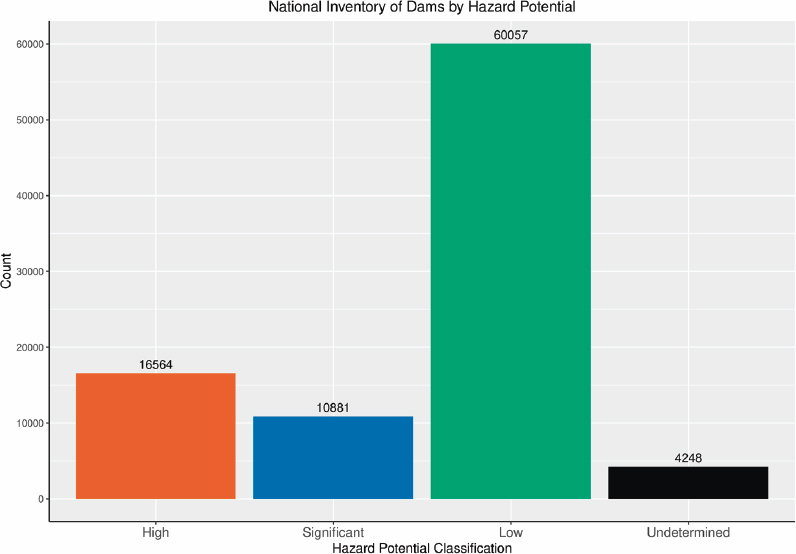
The NID provides data on the three standard hazard potential classification categories (FEMA, 2004): low, significant, and high. The data field can also include undetermined and not available entries. High-hazard potential dams are an obvious priority for continued monitoring and assessment. The physical properties and hydrologic settings of these dams should inform the focus and range of parameters that a modernized PMP estimation process should serve, particularly storm duration and area resolution. Thus, our analysis focused on dams identified as high-hazard potential. Dams that were identified as undetermined hazard were not included in the analysis beyond the total count of dams (Figure C-1).

DAM LOCATION

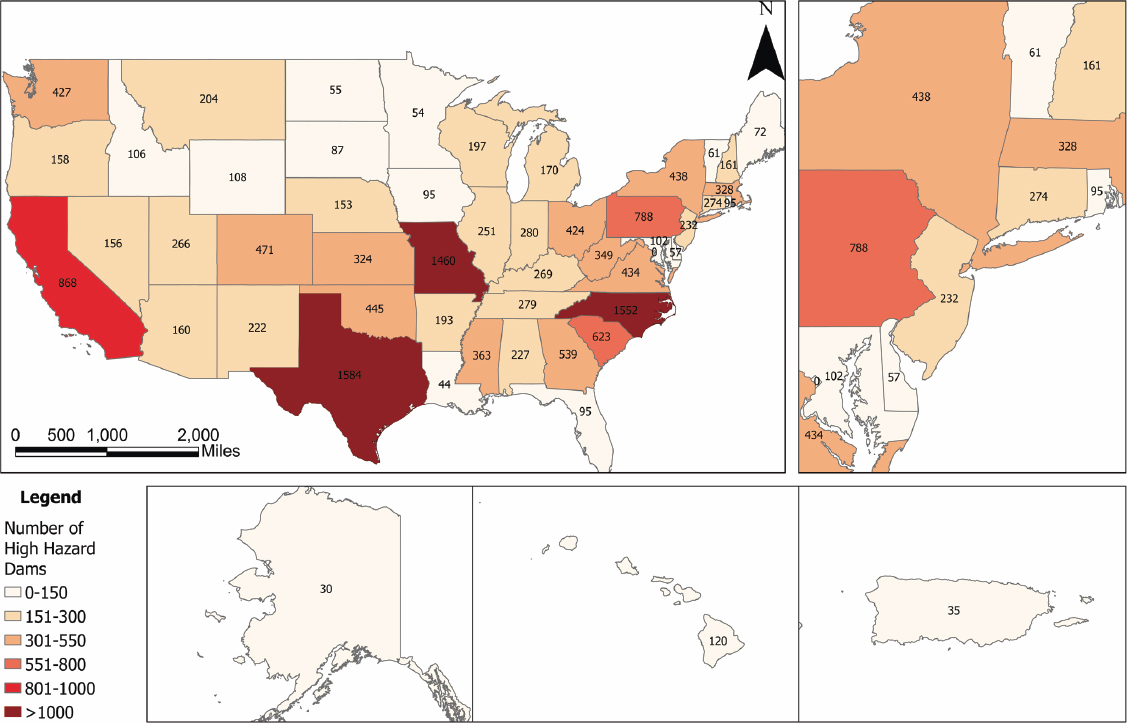
Figure C-2 shows the number of high-hazard potential dams in each state. Figure 2-6 shows the location of each high-hazard potential dam.

DAM OWNERSHIP AND REGULATORS

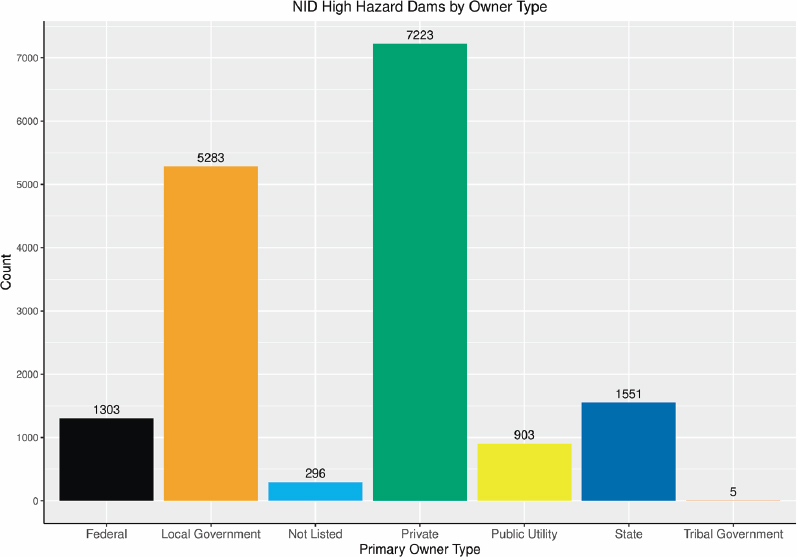
The NID lists seven ownership classes; the vast majority of dams are listed as privately owned or owned by local government (Figure C-3). When dams have multiple owners listed, the Primary Owner Type field was assumed to be the owner responsible for dam operation and maintenance.

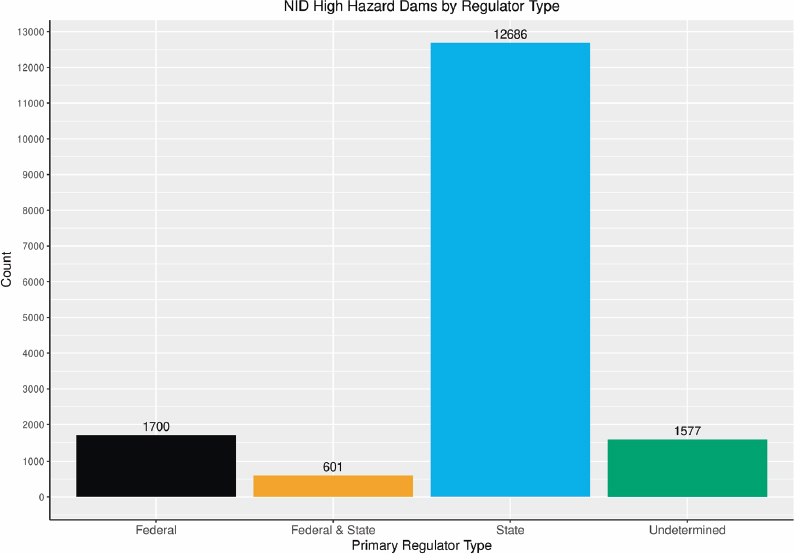
There are both federal and state regulators of dams in the United States. Federal regulators generally focus on privately owned dams in the hydropower and mining industries, respectively. The primary regulators of high-hazard dams are listed in the NID as federal, state, and federal-state combinations. In some cases, the regulator is unknown. The numbers of high-hazard potential dams regulated by each of these groupings are shown in Figure C-4. About 12,686 dams (76.6% of the total) are regulated by state agencies.

___________________

1 This paragraph was modified after release of the report to clarify that the NID database is frequently updated.
Suggested Citation: "Appendix C: Dam Characteristics." National Academies of Sciences, Engineering, and Medicine. 2024. Modernizing Probable Maximum Precipitation Estimation. Washington, DC: The National Academies Press. doi: 10.17226/27460.
Number of dams listed within each hazard potential classification
FIGURE C-1 Number of dams listed within each hazard potential classification.
SOURCE: McGraw (2023), using data from the NID (https://nid.sec.usace.army.mil).

DAM CHARACTERISTICS

Drainage Area

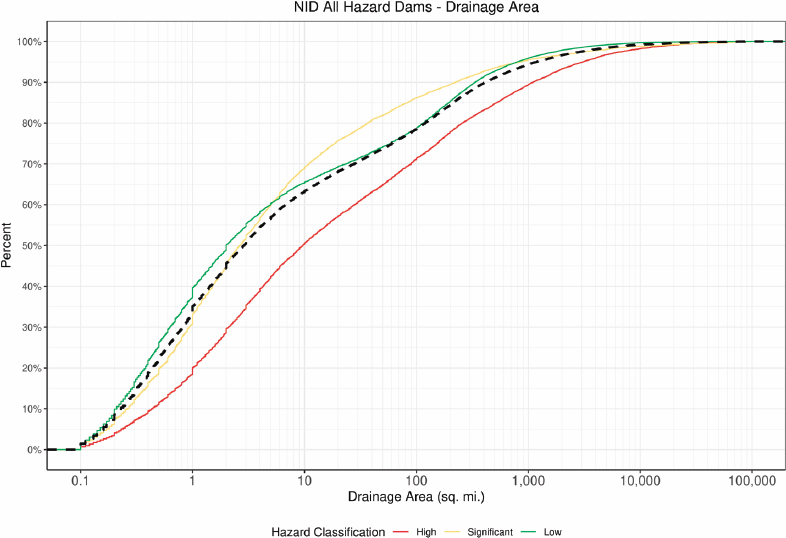
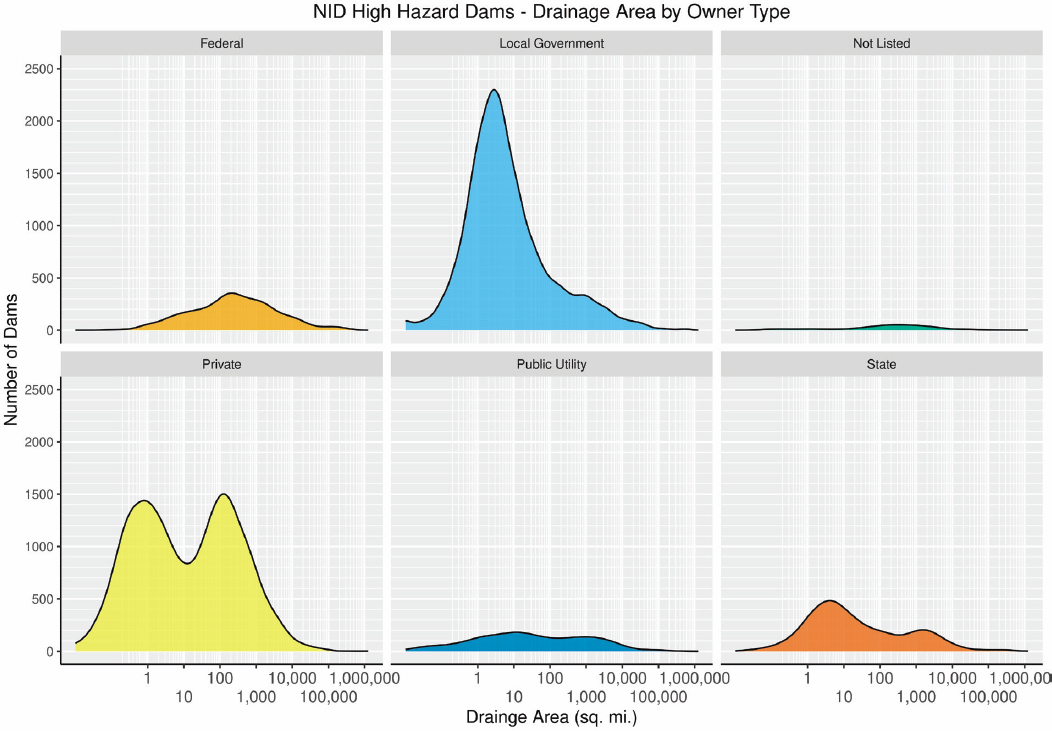
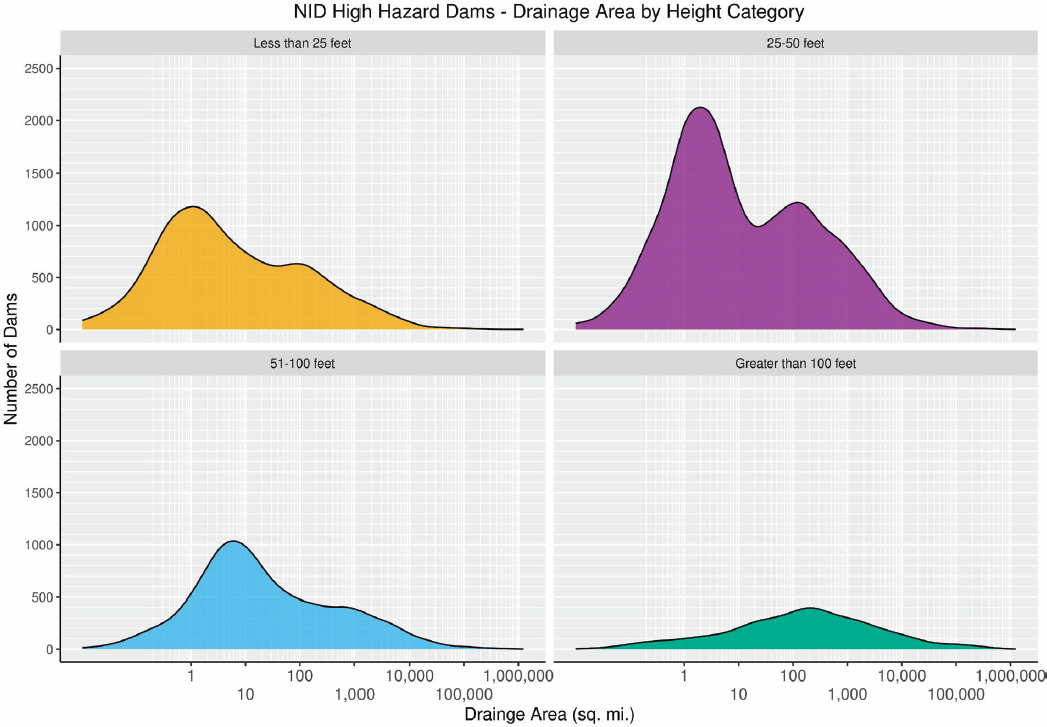
Drainage area distributions for all dams, separated by hazard class, are shown in Figure C-5. High-hazard dams are located on watersheds with larger drainage areas than significant and low-hazard dams (red line). Median drainage area estimates for each state are shown in Figure C-6; the median drainage of most states is less than 100 mi2 with many less than 20 mi2. Density estimates by owner type and dam height are shown in Figures C-7 and C-8; double peaks illustrate high number of dams with small drainage areas (1 to 10 mi2) and secondary peaks at moderate scales (100 mi2) that reflect the river network and watersheds where dams were built.

Material

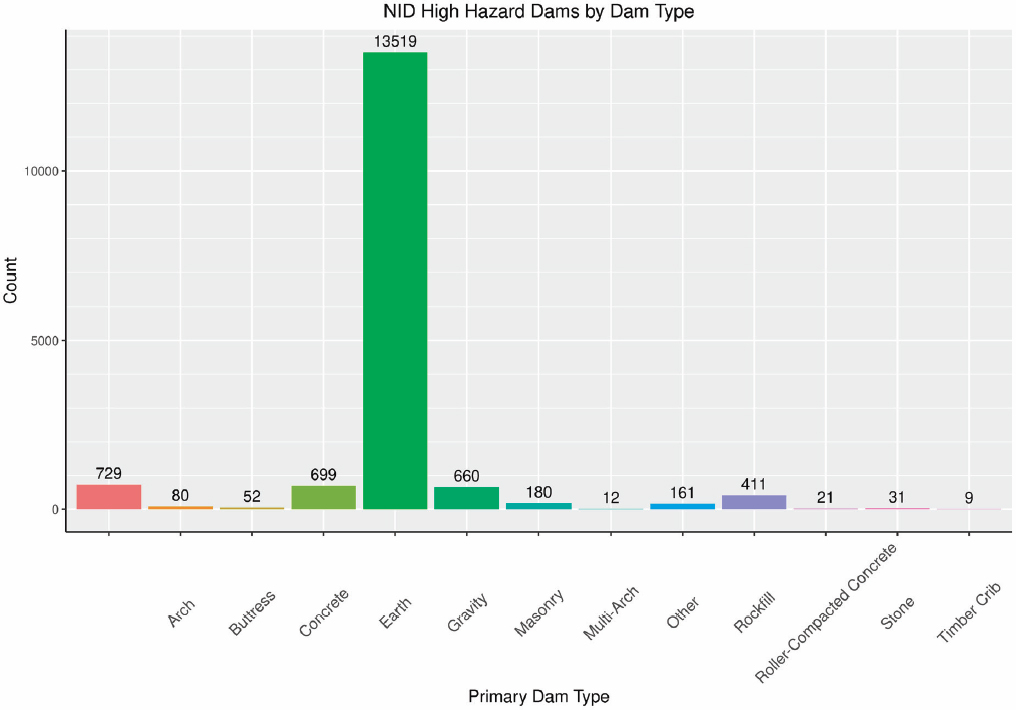
The NID contains information indicating the primary dam type, indicated by thirteen categories. For high-hazard potential dams, the most common dam type is earthen embankment (Figure C-9).
Suggested Citation: "Appendix C: Dam Characteristics." National Academies of Sciences, Engineering, and Medicine. 2024. Modernizing Probable Maximum Precipitation Estimation. Washington, DC: The National Academies Press. doi: 10.17226/27460.
Empirical cumulative distributions of drainage areas, shown by hazard classification. The distribution for all dams is shown by the thick black dashed line
FIGURE C-5 Empirical cumulative distributions of drainage areas, shown by hazard classification. The distribution for all dams is shown by the thick black dashed line.
SOURCE: McGraw (2023), using data from the NID (https://nid.sec.usace.army.mil).
Suggested Citation: "Appendix C: Dam Characteristics." National Academies of Sciences, Engineering, and Medicine. 2024. Modernizing Probable Maximum Precipitation Estimation. Washington, DC: The National Academies Press. doi: 10.17226/27460.
Primary dam type of high-hazard potential dams
FIGURE C-9 Primary dam type of high-hazard potential dams. There are 729 high-hazard dams in the NID that do not have a dam type designated (far left bar).
SOURCE: McGraw (2023), using data from National Inventory of Dams (https://nid.sec.usace.army.mil).
Suggested Citation: "Appendix C: Dam Characteristics." National Academies of Sciences, Engineering, and Medicine. 2024. Modernizing Probable Maximum Precipitation Estimation. Washington, DC: The National Academies Press. doi: 10.17226/27460.

Height

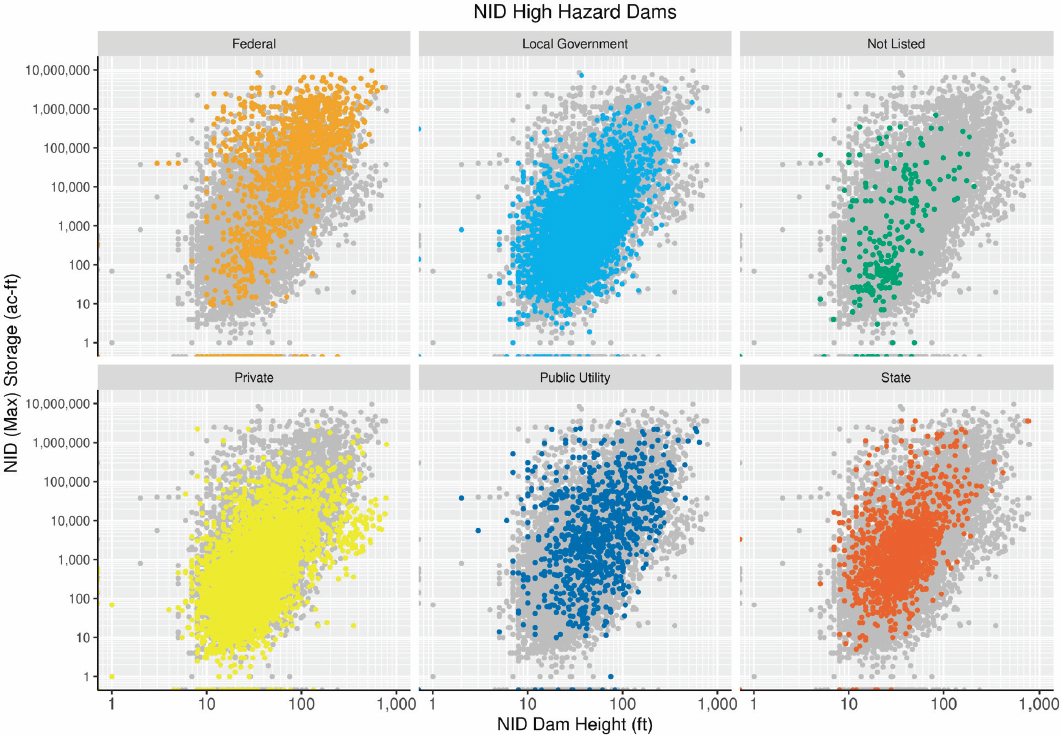
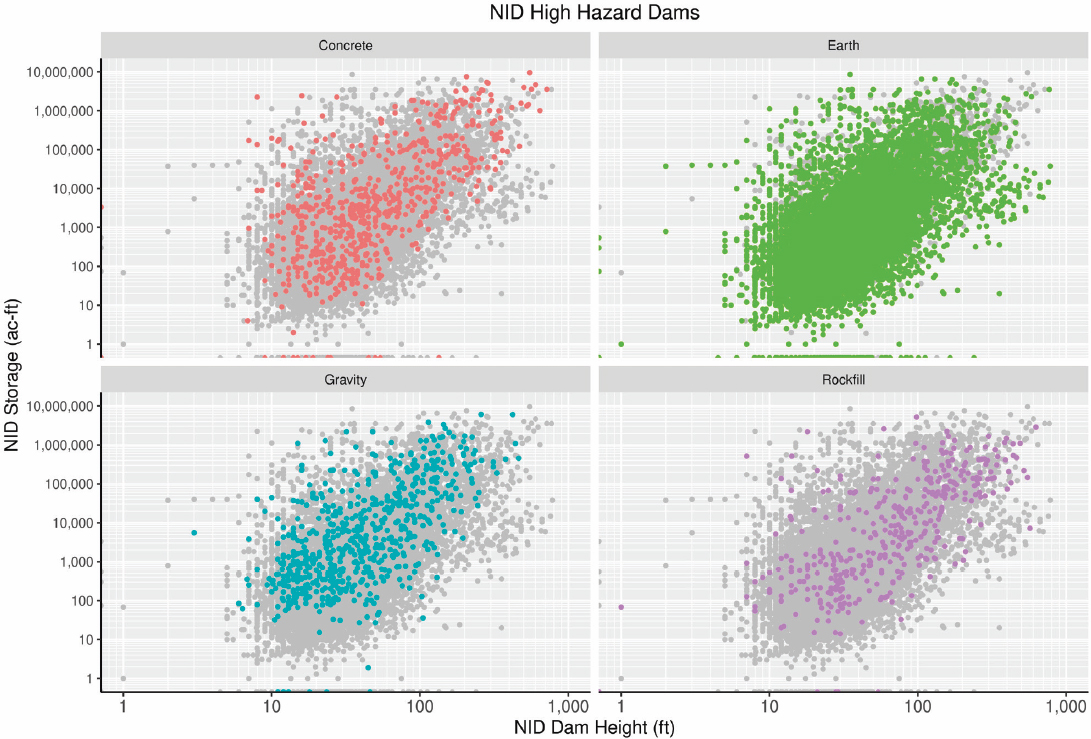
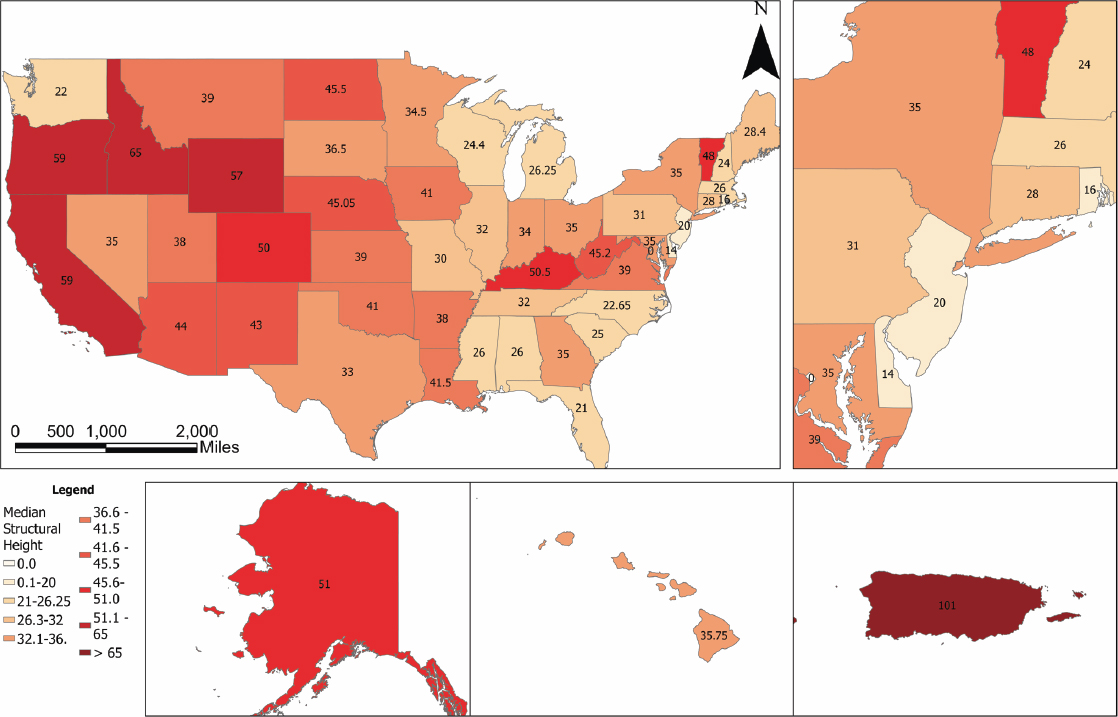
Median dam heights by state are generally less than 50 feet (Figure C-10). Dam height and storage relations are shown by owner type in Figure C-11 and by construction material in Figure C-12.
Suggested Citation: "Appendix C: Dam Characteristics." National Academies of Sciences, Engineering, and Medicine. 2024. Modernizing Probable Maximum Precipitation Estimation. Washington, DC: The National Academies Press. doi: 10.17226/27460.
Page 213
Suggested Citation: "Appendix C: Dam Characteristics." National Academies of Sciences, Engineering, and Medicine. 2024. Modernizing Probable Maximum Precipitation Estimation. Washington, DC: The National Academies Press. doi: 10.17226/27460.
Page 214
Suggested Citation: "Appendix C: Dam Characteristics." National Academies of Sciences, Engineering, and Medicine. 2024. Modernizing Probable Maximum Precipitation Estimation. Washington, DC: The National Academies Press. doi: 10.17226/27460.
Page 215
Suggested Citation: "Appendix C: Dam Characteristics." National Academies of Sciences, Engineering, and Medicine. 2024. Modernizing Probable Maximum Precipitation Estimation. Washington, DC: The National Academies Press. doi: 10.17226/27460.
Page 216
Suggested Citation: "Appendix C: Dam Characteristics." National Academies of Sciences, Engineering, and Medicine. 2024. Modernizing Probable Maximum Precipitation Estimation. Washington, DC: The National Academies Press. doi: 10.17226/27460.
Page 217
Suggested Citation: "Appendix C: Dam Characteristics." National Academies of Sciences, Engineering, and Medicine. 2024. Modernizing Probable Maximum Precipitation Estimation. Washington, DC: The National Academies Press. doi: 10.17226/27460.
Page 218
Suggested Citation: "Appendix C: Dam Characteristics." National Academies of Sciences, Engineering, and Medicine. 2024. Modernizing Probable Maximum Precipitation Estimation. Washington, DC: The National Academies Press. doi: 10.17226/27460.
Page 219
Suggested Citation: "Appendix C: Dam Characteristics." National Academies of Sciences, Engineering, and Medicine. 2024. Modernizing Probable Maximum Precipitation Estimation. Washington, DC: The National Academies Press. doi: 10.17226/27460.
Page 220
Suggested Citation: "Appendix C: Dam Characteristics." National Academies of Sciences, Engineering, and Medicine. 2024. Modernizing Probable Maximum Precipitation Estimation. Washington, DC: The National Academies Press. doi: 10.17226/27460.
Page 221
Suggested Citation: "Appendix C: Dam Characteristics." National Academies of Sciences, Engineering, and Medicine. 2024. Modernizing Probable Maximum Precipitation Estimation. Washington, DC: The National Academies Press. doi: 10.17226/27460.
Page 222
Suggested Citation: "Appendix C: Dam Characteristics." National Academies of Sciences, Engineering, and Medicine. 2024. Modernizing Probable Maximum Precipitation Estimation. Washington, DC: The National Academies Press. doi: 10.17226/27460.
Page 223
Suggested Citation: "Appendix C: Dam Characteristics." National Academies of Sciences, Engineering, and Medicine. 2024. Modernizing Probable Maximum Precipitation Estimation. Washington, DC: The National Academies Press. doi: 10.17226/27460.
Page 224
Suggested Citation: "Appendix C: Dam Characteristics." National Academies of Sciences, Engineering, and Medicine. 2024. Modernizing Probable Maximum Precipitation Estimation. Washington, DC: The National Academies Press. doi: 10.17226/27460.
Page 225
Suggested Citation: "Appendix C: Dam Characteristics." National Academies of Sciences, Engineering, and Medicine. 2024. Modernizing Probable Maximum Precipitation Estimation. Washington, DC: The National Academies Press. doi: 10.17226/27460.
Page 226
Next Chapter: Appendix D: Criteria for a Modern PMP Estimation Process
Subscribe to Email from the National Academies
Keep up with all of the activities, publications, and events by subscribing to free updates by email.