State of the Science and the Future of Cumulative Impact Assessment: Proceedings of a Workshop Series (2025)
Chapter: 2 Community Engagement Workshop in New Orleans, Louisiana
2
Community Engagement Workshop in New Orleans, Louisiana
On November 20, 2024, the National Academies hosted a one-day workshop in New Orleans, Louisiana, providing a forum for in-person, in-depth conversations between community members in the greater New Orleans area and the Committee on State-of-the-Science and the Future of Cumulative Impact Assessment. Organized with input from the committee’s community and Tribal liaison group, the workshop aimed to elevate perspectives and local knowledge from community members to inform the committee’s deliberations and help shape its advice to the nation. The day before the workshop, the committee conducted a tour of the Mississippi River Parishes between New Orleans and Wallace, Louisiana, during which local members of the community and Tribal liaison group shared their perspectives on their community and its history with committee members.
At the start of the workshop, Committee Chair Weihsueh Chiu (Texas A&M University) and committee member and Workshop Chair Yoshira Van Horne (University of California, Los Angeles) welcomed attendees, acknowledged the contributions of the community and Tribal liaison group, and expressed gratitude to Jo Banner (The Descendants Project) and Raymond Sweet (Hollygrove-Dixon Neighborhood Association), who worked with the National Academies staff to organize the event. Committee members then shared their reflections from the prior day’s site visit to the region. Workshop participants were then oriented to the World Café method and divided into small groups for facilitated discussions during the workshop’s two breakout sessions. These sessions were designed to elicit community members’ lived experiences and views on the stressors that impact them, as well as their vision for improved health and well-being. Following each breakout session, committee member rapporteurs shared their reflections and lessons learned from the discussions with the workshop participants.
SITE VISIT REFLECTIONS
Committee members Yoshira Van Horne and Kristen Malecki (University of Illinois Chicago) shared their reflections on the prior day’s site visit. During the visit, Jo Banner, Raymond Sweet, and Verdell Banner (The Descendants Project) provided a community-level view of the greater New Orleans area with a focus on the parishes located along the Mississippi River between New
Orleans and Baton Rouge, known collectively as the River Parishes. Participants visited the Whitney Plantation in Edgard, Louisiana, where they learned about the history of slavery in the region. This visit provided a historical context, revealing the injustices that occurred in the area and have led to the industrial development that affects residents today. The group also visited the nearby community of Wallace in the St. John the Baptist Parish to gain a deeper knowledge of land usage and saw several refineries and other industrial sites.
Van Horne reflected that a few hours visiting these sites could not encompass everything that people living in those areas have experienced but was, nevertheless, insightful. For example, the group gained a new appreciation for the number and size of the industrial facilities and their proximity to residences (Figure 1-1). The group could smell the emissions in some places and observed that entire neighborhoods, not just a few houses, were sandwiched between facilities. Van Horne also drew attention to a brochure titled “Plantations to Petrochemicals” that was created by The Descendants Project to highlight the issues of concern to local communities.
“We are very much used to […] seeing all of this from our viewpoint, or lens, of air pollution data,” she said. “Being able to go and see it with our own eyes is something very different. It gave us a deeper understanding of [what it means] when people say, ‘I live right across from this aluminum plant or other type of facility.’”
Malecki offered additional reflections on the site visit. She underscored the importance of recognizing the value of human lives and the vibrancy of communities that have experienced intersecting impacts. “Communities are so incredibly strong, and human lives are so incredibly important,” she said. “Our work in thinking about cumulative impacts comes to be much more than the data and the statistics and the maps.”
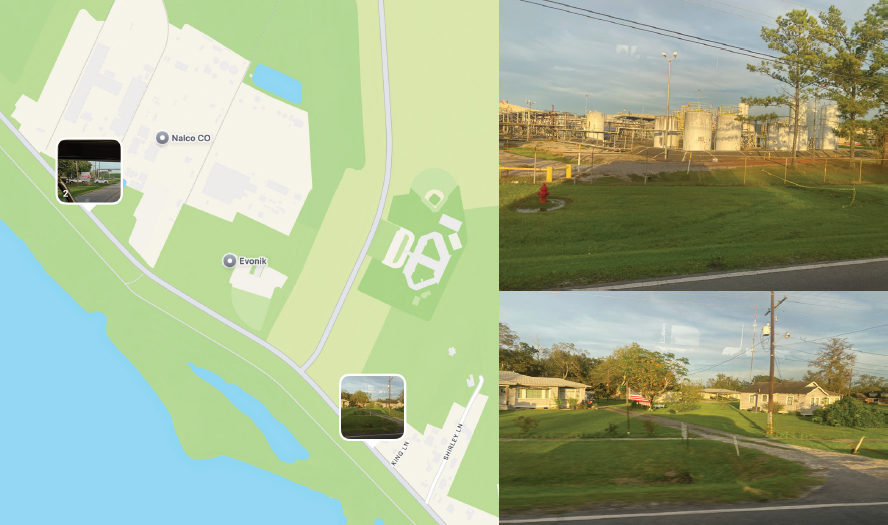
Malecki pointed out that the River Parishes area, often referred to as “Cancer Alley,” faces significant cumulative impacts. In addition to experiencing historical environmental exposures, she said the communities in this area are also among the most vulnerable to future climate change impacts.1 The concentration of petrochemical and natural liquified gas facilities continues to grow in an area that is already overburdened with environmental challenges, and Malecki emphasized the need for science and informed decision-making to mitigate further harm. Although individual factories may comply with regulations, the cumulative impact of multiple facilities in this single area raises concerns. She noted that the committee is discussing the scientific and policy tools to assess and address these combined effects and is incorporating community experiences and stressors into its approach.
The site visit also highlighted the intersection of environmental and occupational health, particularly in communities where people live and work in the same place. The industry in the area sustains livelihoods while contributing to pollution, making the consideration of historical and economic contexts crucial. Seeing these areas first-hand also revealed the importance of incorporating community voices into scientific frameworks and policy recommendations at both the state and federal levels, Malecki said.
STRESSORS IMPACTING HEALTH AND WELL-BEING
Participants were divided into groups for break-out discussions with committee members and Academies staff. After brief introductions, the committee members, who served as facilitators and rapporteurs for the discussions, posed a question to their groups and invited all participants to respond. After 20 minutes, each group transitioned to a different room to discuss the next question with a different set of committee members supported by Academies staff. With this approach, each participant had the chance to discuss each question and committee members had the benefit of direct dialog with each participant. After reconvening, committee members who served as discussion rapporteurs summarized the high-level themes and comments they heard during their sessions.
The first breakout sessions centered on the following questions:
- What are the main stressors experienced in your community now?
- What will be the main stressors in the future (in the next 10–20 years)?
- What makes your community more vulnerable to stressors?
Recognizing Current Stressors
Rachel A. Morello-Frosch (University of California, Berkeley) and Rima Habre (University of Southern California) facilitated conversations about the stressors that participants currently experience in their communities.
Morello-Frosch reported that climate change was a common concern for many participants. Participants pointed to the increasing frequency and intensity of storm events in this area of Louisiana, including of tornadoes. Given communities’ close proximity to industrial facilities,
___________________
participants said that residents worry that storms could create “toxic soups” of pollutants. They pointed to a lack of transparency and information sharing from industry, insufficient planning, potential failures of industrial systems, and a lack of storm infrastructure as examples of factors contributing to this perceived risk.
Several participants also highlighted the impact of increasing flooding and storm events on access to homeowners’ insurance, Morello-Frosch said. As insurers raise rates for homeowners and flood insurance in response to the growing threat of adverse weather events, homeowners may be forced to move because they can no longer afford to insure their homes. This problem is exacerbated by a lack of regional planning, which means that construction and flood control efforts in one community can create flooding and storm challenges in other communities that are in low-lying areas, some participants noted.
Several participants noted threats to their water supplies as rising sea levels cause saltwater intrusion into certain water sources. They added that saltwater intrusion not only affects access to drinking water but also affects residential plumbing systems and appliances such as washing machines and dishwashers. Dr. Kimberly Terrell (Tulane Environmental Law Clinic), who was speaking in her in personal capacity, noted that the solution is “not as simple as going and getting bottled water, because your whole house’s systems are not meant to run on salt water.”
Other participants pointed to threats from air pollution. They highlighted the lack of transparency regarding everyday exposures and the lack of warning or communication for incidents such as fires at nearby plants or large plumes of smoke. As an example, one participant described being awakened at night by a strong odor and expressed fear and anger about not knowing what they are breathing.
Another recurring theme from the discussions was a feeling of abandonment by both industry and regulatory agencies, Morello-Frosch noted. When information is not shared in a timely way, residents perceive that by the time they become aware of a hazard, it is often too late to take proactive steps to protect themselves. Angela Chalk (Healthy Community Services) added that residents and communities are often not at the table when decisions are made.
Habre said that groups in her room talked about the layered stresses of climate change and industrial pollution, emphasizing the region’s extremely high concentration of potential sources of pollution. Several participants raised concerns around the increasing frequency of hurricanes and storms, describing how the damage from these events can extend beyond physical damage to affect mental health, especially when these events continually repeat and the community cannot recover from one event before the next one occurs.
“On just regular rainy days—like not a hurricane, a tornado—anytime there’s a forecast of rain, we get scared,” said Roishetta Sibley Ozane (Vessel Project of Louisiana). “We’re developing PTSD [posttraumatic stress disorder] and other mental issues that we don’t have the health insurance or the resources to go to the doctor and be seen. And then on top of that […] we have the noise pollution from the facilities. All of that is cumulative […] one person, one community, one neighborhood is dealing with all of these things.”
Several participants also commented that some of the recent industrial growth in the region has been driven by “green” technologies that are intended to help mitigate climate change. Residents are concerned that green technology facilities, such as ammonia plants and carbon sequestration plants, are repeating some of the same patterns seen with previous industrial development. For example, some attendees said that, spurred by incentives from the Inflation Reduction Act
of 2022, plants may be built quickly, and before concerns can be addressed. In addition, the simultaneous expansion of so many new industries has led to increased water contamination and increased construction around wetlands, which can make the region more vulnerable to climate threats.
One participant noted that communities don’t feel they have a voice and don’t feel they can stop the plants. This participant noted that community members don’t know where to go or who to talk to in order to stop plants from being built in their communities, highlighting the need to help communities advocate for themselves.
The housing crisis is another significant concern for the region’s residents, Habre said, adding that this issue is deeply intertwined with racial discrimination, segregation, and land encroachment. Rising housing costs and soaring insurance premiums, due to climate change risks, also worry some participants because residents may be pushed out of their neighborhoods. Some participants noted that gentrification can occur as investors buy up housing for workers from out of town who make money in these communities but go elsewhere to spend that money. Other participants expressed concern that this pattern erodes community identity, that is, the bonds that people have with each other and with traditional knowledge.
Several participants also described feelings of being trapped and highlighted barriers related to a perceived lack of empowerment to make meaningful change, Habre said. When faced with such overwhelming cumulative challenges, some people choose to ignore the problem altogether, which complicates efforts by advocates to push for positive changes. Others are so consumed by the demands of daily life—for example, managing all their doctor’s appointments—that they have limited capacity to focus on larger systemic issues. Habre ended by saying that people are finally beginning to realize that injustice for some groups amounts to injustice for everyone.
Anticipating Future Stressors
Another discussion question focused on what stressors residents anticipate for their communities in the next 10 to 20 years. Malecki and Cris B. Liban (Los Angeles County Metro Transportation Authority) shared key themes emerging from the discussions that they facilitated on this topic.
Malecki reported that the prospect of future population loss was a major concern for residents. This loss could be driven by pollution itself, as well as climate migration and declining access to infrastructure, housing, and insurance, some participants said. Several participants said that a lack of basic infrastructure, such as schools, grocery stores, and hospitals, in some places is further exacerbated by the loss of insurance and other housing pressures. Malecki reiterated a concern voiced by several participants: “As the industry begins to take over in many of these places and spaces, how do we ensure we don’t lose our communities?”
Education was also an important focus for participants, Malecki said. Several participants underscored the need to think critically about how to educate the region’s youth and empower them to make informed decisions. Other participants highlighted the role of education in equipping the workforce with the right skills for today’s jobs.
Infrastructure emerged as another key area of concern for the region’s future. Many participants explained that the current infrastructure is failing, and it is important to think about not only how to fix and improve infrastructure but also how to identify and invest in the structures and
skills to maintain it into the future. This includes, for example, not just building roads and sewers but also improving water infrastructure to prevent flooding. Energy infrastructure is also key, given that weaknesses in the existing infrastructure have already led to power outages affecting the community. Several participants highlighted the value in examining how the incorporation of different energy sources such as solar panels could help to increase reliability and resilience. Some participants also noted that green infrastructure can bring benefits, but a systems-thinking perspective can help avoid unintended consequences. For example, although investments in green technology can reduce carbon emissions, they may also introduce new issues, such as increased ammonia releases. Awareness of these trade-offs is essential when implementing sustainable solutions, Malecki said.
Finally, some participants emphasized the importance of empowering communities and addressing fears that can lead to disenfranchisement. For example, several participants commented that companies can claim defamation if organizations document and publicize air pollution from their facilities, underscoring the importance of community access to credible information.
In addition to the topics that Malecki described, Liban said that participants in his room expressed concerns about how future political developments could influence what happens in their communities. They pointed out that local politics and leaders play a key role in addressing the issues that residents anticipate for the future. For example, even when policies are established, they are not always consistently implemented as priorities and investments change over time. The result is that even well-recognized community needs can go unmet.
Some participants raised additional concerns about the operation and maintenance of infrastructure, emphasizing that infrastructure decisions interact with other challenges faced by the community. One example is water treatment. Although residents are concerned about pollutants, saltwater intrusion, and drinking water advisories, some participants stressed the need for decision-makers to also consider the broader impacts of increased water treatment standards on energy costs, basic utility expenses, rising insurance rates, and overall day-to-day living in these communities as they explore options for addressing these fundamental issues. “The costs of maintaining the safety, even the minimal safety that we have right now of our public drinking water system, are likely going to skyrocket, and those costs are going to be put on rate payers,” said Patton.
Cleanup and remediation of contaminated sites pose another set of challenges participants anticipate for the future, Liban said. Some participants said that residents worry about the potential for earthquakes to cause pollution releases, especially in areas near facilities housing radioactive materials. In addition, because many facilities were grandfathered in under newer regulations, they may operate under older, less stringent rules. Eventually, these facilities will become Superfund sites,2 requiring extensive cleanup. However, some participants anticipate a lack of resources to properly manage and decommission these sites when the time comes.
Some participants emphasized that scientists, practitioners, and policymakers often assume they can determine what is important for a community. However, when engaging directly with the people affected, it becomes clear that if basic needs are not met, then many of the proposed solutions or discussions may become irrelevant. Liban concluded by emphasizing the need for action, engagement, education, and ensuring that the leaders who communities support are truly advocating for their interests.
__________________
Factors Contributing to Community Vulnerability
Van Horne and Courtney Woods (University of North Carolina, Chapel Hill) shared insights from the discussions they facilitated about the various factors that can make communities more vulnerable to stressors.
Some participants stated that communities are often constrained in their ability to influence what developments come into their area. For example, participants in Van Horne’s room identified zoning as a key issue. Several conversations focused on Louisiana’s unique property and inheritance laws that can make land ownership vulnerable to outside interests. In addition, some participants noted that economic disempowerment and a lack of resources can leave community members feeling as though they have no choice but to let industrial facilities move in because they need employment.
Some participants also highlighted gaps in pollution monitoring and enforcement. Scott Eustis (Healthy Gulf) said that enforcement in response to hazardous materials emergencies sometimes falls to Louisiana’s state agencies because the area lacks federal pollution monitors. Some participants emphasized that it does not take a major disaster to cause pollution releases and related health impacts, noting that “low-impact disasters” can have direct impacts. For example, upset events that cause only a short burst of emissions may be more frequent, but are not always accurately captured and can nevertheless have health consequences. “We know from public health that a couple of hours of very heavy particulates can be really bad for heart health and lung health […] These short-term events happen like clockwork,” said Eustis.
Van Horne said that many participants in her room also discussed how historical injustices (that in many ways continue) may not be accounted for in cumulative impacts assessments even though they contribute to cycles that make communities more vulnerable. Several participants noted that Native American tribes continue to be displaced from their land, particularly along coastlines, while threats from flooding, hurricanes, and tornados make these displaced communities increasingly vulnerable. Some participants also underscored the importance of more education and collaboration to help communities navigate systems and information around zoning laws, emissions regulations, and the latest scientific research on various pollutants. “Now more than ever, [community organizations] have to do a better job of empowering residents to take that next step, so that we can get the resources needed in our community,” said Angela Chalk (Healthy Community Services).
Woods said that discussions in her room touched on many of the same topics as those described by Van Horne. In addition, participants delved into the role of racial and class-based residential segregation as a driver for how communities might be impacted by multiple stressors and end up with a high concentration of industrial facilities in and around their neighborhoods. Several participants talked about the absence of buffer zones, or transitional areas between different land uses. They noted that the location of homes and residential areas in close proximity to industrial facilities increases residents’ risk of pollution exposures. Some participants also cited the potential addition of new industrial development to areas with an already high concentration of industrial facilities.
A related issue highlighted by some participants is a lack of voice in some communities, especially in rural areas. Some local officials see high-volume industry as a priority over other types of development that might be envisioned, a participant noted. The low population density of
rural areas contributes to their vulnerability because they have less standing or leverage to oppose a particular permitting or zoning decision. At the same time, the low population density works against these communities in justifying allocations for protective resources such as air quality monitoring infrastructure. “I see a lot of plants going into unincorporated communities […] where there is no mayor to have a say,” said Kimberly Terrell (Tulane University), who was speaking in her personal capacity. “The requirements for monitoring under the Clean Air Act are based on population size, which inherently will leave out rural communities. There are places that are heavily impacted by a dozen or more plants, but the Louisiana Department of Environmental Quality says they’re not legally required to put air monitors in these small neighborhoods.”
Other participants discussed climate change impacts such as increased flooding, which exacerbates impacts from polluting industries while acting as a stressor in and of itself, creating additional vulnerabilities. The frequency of these events can be just as important as their severity; for example, hurricanes clearly cause damage but experiencing heavy rains and flooding every month can make it difficult to recover and become more resilient to future events.
Financial vulnerability was another important focus. One participant said that homeowners’ insurance can cost as much as $15,000 a year, an amount that many residents simply cannot afford. They talked about residents often not reporting problems to their insurers—keeping tarps on their roofs for several years after a storm, for example—because of concerns about increased insurance premiums or terminated policies. Gentrification can also exacerbate such financial stressors, Woods noted. Some participants explained that lower-income residents have been driven from areas that have resources such as transportation and food markets into areas that lack those resources and are not built for the current population growth.
Finally, Woods said that issues around governance and other factors that influence decision-making can create gaps that contribute to community vulnerability. For example, some participants said that communities can feel disempowered and apathetic when they perceive that they have little influence over decisions about permitting or investment of state resources. Other participants highlighted a general lack of coordination across all levels and branches of government in decision-making. For example, a participant described a case in which the state allocated funding for water infrastructure, but state agencies ended up sending hundreds of millions of dollars back to the federal government instead of investing the funds as intended.
Lobbying was highlighted as another concern, which can elevate the influence of industries over that of communities. Although local officials may engage in lobbying at different levels of government to secure resources or advocate for policies that align with their constituents’ needs, their work can sometimes be overshadowed by larger corporate interests, an issue that can be exacerbated when numerous industries are concentrated in a small area. “I don’t know if this ‘Cancer Alley’ is duplicated anywhere else, where you have 224 industries stacked on top of each other,” said Verdell Banner. Some participants also said that the courts, which are often perceived to be a forum for residents to fight some of these decisions, may not be favorable for them. One participant highlighted the example of an air quality–related permit that was vacated but then the decision was later appealed when the judge moved to another court.
FUTURE VISION TO IMPROVE COMMUNITY HEALTH AND WELL-BEING
The second set of breakout discussions occurred during the afternoon, following the same process as the first set but focused on the following future-looking questions:
- What are the barriers to strengthening your community’s ability to respond to stressors?
- What is your future vision of improved community health and well-being?
- What is the most important aspect for our committee to consider?
Challenges for Building Community Resilience
For the afternoon session, Morello-Frosch and Habre facilitated discussions focused on the barriers that communities face in strengthening their ability to respond to stressors. Noting that resilience is complex and multifaceted, Morello-Frosch said that some participants emphasized the importance of meeting communities where they are. Other participants commented that barriers can also be turned into opportunities, depending on capacity, time, and money.
One theme that arose in Morello-Frosch’s room was a perception of political disenfranchisement and mistrust in government. Many participants said that communities can face significant barriers to meaningful engagement with agencies, especially when officials are unwilling to engage in return. Although regulatory agencies are responsible for regulating and addressing the problems that are important to communities, it can be challenging for community members to parse through the wide range of different government agencies in order to understand which agency does what. Many community members may believe that they lack political power, particularly when it comes to resisting development pressures and land acquisitions by outside investors and agencies, Morello-Frosch said. In addition, many participants said that weak enforcement of existing laws and regulations can lead to a persistent lack of oversight, allowing longstanding issues to go unaddressed. Some participants noted that social media can help with organizing community-led efforts, but it can also perpetuate false narratives and misinformation, thereby dividing communities and making it more difficult for various communities to join forces and work together toward a shared goal.
Participants in Morello-Frosch’s room also touched on complex issues around poverty and social barriers to resilience. Several participants noted that any change can be intimidating for people, making it challenging for them to embrace something new. Against this backdrop, Morello-Frosch said that it is critical to make space and time to address communities’ experiences of trauma and grieving and the associated mental and physical health effects. Some participants said that the education system poses another challenge for building community resilience when it fails to teach students what they need to know or give them the skills needed to acquire good jobs that will not require them to choose between their health and the ability to feed themselves and their families.
Social connectivity can facilitate community resilience. Participants noted that unlike cities, which have many natural gathering spots where people can casually interact, rural communities lack everyday points of connection and dialogue. “Particularly in the River Parishes […] I feel like there’s a lack of public commons,” said Justin Kray. He noted that a weakness of rural communities is the absence of spaces outside of churches where neighbors may encounter each other, such as a grocery store or ferry landing.
Habre described several related issues around personal and social barriers to community resilience that were discussed in her room. Some participants suggested that many of the problems that communities face are so long-standing that people have either accepted them as the status quo or have experienced so much trauma that apathy has set in. This situation can make it difficult to
motivate people to become more involved and engaged in efforts to spur positive change. Other participants underscored how racism, sexism, and high unemployment rates can exacerbate these issues and create additional barriers. In addition, misinformation and miseducation can complicate community members’ understanding of the issues, and some attendees also noted that residents are not always aware of opportunities to influence public decision-making such as permitting decisions through public hearings. To address these barriers, some participants suggested that better communication and education could improve community members’ science literacy and access to expertise, and more equitable access to knowledge, resources, and local job opportunities can help communities more effectively navigate their challenges.
Participants in Habre’s group also discussed a number of barriers related to inadequate or misaligned government response, oversight, and incentives. Because federal agencies such as the Federal Emergency Management Agency and the Coast Guard may not have a strong presence in these communities, some attendees said that emergency response efforts can be delayed or inconsistent, leaving local residents without timely support. In addition, some participants highlighted how gaps in oversight and data can contribute to the high concentration of industrial facilities (and pollutants) in some areas. They explained that legal and tax credit loopholes can be used to place new facilities in these communities and then they may not be held accountable for their emissions. For example, a participant said that if facilities are approved under minor source rules or other reporting rules, then they can operate without reporting their emissions and their impacts are not captured in the screening or geospatial tools used to study pollution in the area.
Tax incentives and fines can also be counterproductive or fail to incentivize the types of operational improvements that could benefit local communities. As a related issue, companies can find it more cost-effective to violate regulations and pay fines by voluntarily disclosing their violations. According to some participants, this approach is often followed as part of compliance programs that allow them to report infractions and pay fines rather than face harsher penalties. The consequence, however, is that the underlying pollution issues are not addressed. Some participants also said that efforts to address problems can wind up shifting the burden to neighboring communities. Ultimately, however, these issues accumulate and become a shared burden because what gets pushed downstream does not simply disappear. In addition to these gaps in accountability and enforcement, another challenge highlighted by some participants is that much of the tax revenue generated in these local communities is not reinvested back into them.
Finally, Habre described that community organizers can face challenges in accessing and managing funding, sometimes struggling with issues of trust around the ways in which funds are allocated or distributed. Some participants noted that they are often forced to rely on larger, more established organizations to secure funding, which can create competition rather than collaboration. In some cases, they must shift their mission to align with funders’ priorities instead of focusing on the work they originally intended to do. “We have forgotten that change is rooted in relationships,” said Barbara Major. “We don’t build relationships [any] more—we build programs and projects.”
Envisioning a Future with Improved Health and Well-Being
Malecki and Liban facilitated afternoon discussions around a future vision for improved community health. Malecki reported that her room held robust discussions on taking a more
programmatic approach to the future. Some participants suggested that, ideally, the future would include more impactful regulations, stricter restrictions on existing industry, and no additional industrial development in the area. Participants also considered whether and how it might be possible to build more positive relationships between industry and communities to support local assets. Joh Johnson (Louisiana Bucket Brigade) said that many residents may want the oil and petroleum industry to leave the area but recognized that this might not be a realistic proposition. In terms of the future, Johnson said he would like to see “a relationship developed between the communities directly impacted by the petro and oil industry where communities can be assisted with weatherization, with air monitoring, with the merger of […] fossil fuel use [and] green infrastructure, hopefully [with] the price tag being taken care of by big industry if they really want to stay within communities.”
Malecki reported that some participants described a healthy future as one that emphasizes community engagement, education, and empowerment, enabling communities to make significant decisions for themselves. Likewise, communities could be liberated from government dependence and industry influence, fostering true agency and self-determination. It is also essential to find ways to capture and preserve the community’s culture and assets, to prioritize mental health, and to restore the sustainability of cultural traditions, Malecki said. “When we look at the future, it’s more engagement, education, and empowering residents to be able to make decisions for themselves,” said Angela Chalk.
Several participants underscored communities’ need for better and more equitable access to health care and discussed the roles and responsibilities of industry and government in supporting this goal, Malecki said. In particular, some participants highlighted the importance of greater attention to screening and health surveillance to catch conditions earlier when they are more treatable. “I would like to see health outreach in our community, like small clinics,” said Ali Johnson (The Descendants Project). Some participants suggested that polluters could pay for health care access. However, others cautioned that such an arrangement could result in residents being beholden to the polluters for access to care.
Some participants also highlighted opportunities to enhance community well-being by investing in community gardens, green infrastructure, and other features of the built environment. Other participants suggested that community advocacy and support could help to bring people together in a positive way to envision what they want their communities to look like and to help to shape such features. Jacqueline (Jackie) Baham (Water Wise Gulf South and New Orleans East Green Infrastructure Collective) described her vision to equip communities with the state-of-the-art climate-resilient infrastructure and imagined a community that has “[…] green spaces, and a reintroduced wetland buffer, […] and residential homes that are built to withstand severe weather events, and the community enjoys clean air and water.”
Liban noted that discussions in his room around envisioning a better future evoked some deep emotions. He said that many participants emphasized the importance of education, pointing out that discontinued programs, such as industrial arts programs, that once helped high school students become productive members of the community could have filled many of the gaps the communities currently experience in education and workforce development. The importance of a more equitable and collaborative relationship between the community and industry in advancing health and justice was another common theme. Verdell Banner outlined a vision for achieving a more balanced relationship between people and industry. Several community members suggested
that because many of the companies received tax breaks to establish themselves in the area, it would be ideal for them to go beyond just operating in the community and become true partners, actively contributing to and making a meaningful difference in the community.
Empowerment was another key theme of the discussions. Liban noted that empowerment involves tapping into a person’s own power, rather than depending on someone to provide that power.
Key Considerations for the Committee
Woods and Van Horne facilitated discussions eliciting participants’ views on what is most important for the committee to consider in discussing the future of cumulative impact assessment.
Several participants in Woods’ room emphasized the importance of focusing on people. This focus includes recognizing the central role of intergenerational relationship building that happens in various community spaces and how it can be destroyed when older members of the community die prematurely, for example from exposure to toxins or diseases such as COVID-19. A participant also suggested that public health scientists should place equal weight on physical health impacts from toxic exposures and other impacts, such as socio-emotional impacts and loss of intergenerational relationships. Cultural resources are also an important facet of a community, and a participant posited that resources such as gravesites and forensic architecture can be used not only to preserve history and culture but also to protect sites from industrial development and adverse impacts.
Several attendees highlighted important considerations around the generation and use of data, Woods said. Some participants expressed concern that scientists may look only at averages and therefore miss the spikes in pollutant emissions that can influence health. The spatial resolution of data is also important. Pointing to the Louisiana Tumor Registry as one example, a participant suggested that parish-level data analysis does not reveal the full impact as effectively as a higher-resolution spatial analysis would. Some participants also noted that the impacts of pollution exposures can be misinterpreted or underappreciated against the backdrop of other factors that influence health in these communities.
Regarding the types of data that could be useful going forward, some participants highlighted the value of balancing quantitative data with narratives and qualitative data. For example, one participant suggested that additional longitudinal studies may not be needed because the pronounced increase in cancers in the River Parishes area is already well established. However, more information on the level of contaminants present could be helpful, as would understanding the interconnections among different exposures and health impacts. “The knowledge is in the community […] The cumulative impacts exist in the stories that people know—how many relatives they lost to cancer, what kinds of cancer, and how quickly it came and where they live and where they work,” said Justin Kray. “You can draw out this kind of information by talking to the communities that have been impacted by it.”
Some participants also suggested that data could be leveraged to identify areas with a higher risk of industrialization. For example, examining where wetlands with low property values overlap with a high concentration of industrial activities could reveal patterns in terms of the areas that industry tends to target for growth. Several participants also expressed a concern that funders of
research or community grants may not be adequately invested in supporting long-term, comprehensive approaches that truly empower and transform the community. To address this issue, one attendee suggested soliciting community input to define what “community” means. “The definition of community needs to be clear from the community, not from the grantor,” said Raymond Sweet (Hollygrove Dixon Neighborhood Association). “A lot of [Requests for Proposals] say ‘community’ but really, they mean municipalities. My community is not my whole entire city […] they’re not the same things.” He also noted that these specific communities have different issues and therefore may require a different response.
Several participants underscored considerations around representation and responsibility, Woods said. One attendee posited that government does not always adequately represent communities affected by industrial activity, especially those most vulnerable. “We don’t have a voice,” said Cynthia Robertson (Micah 6:8 Mission). Another participant suggested that actors who are creating the problems should be held responsible for creating the solutions.
In her room, Van Horne said that many participants emphasized the importance of facilitating community involvement in broader decision-making efforts in a more meaningful way. “How can the community be part of the [policy making and funding] process instead of constantly fighting back against something?” asked Jeffrey Supak (Water Wise Gulf South). “How is there a pathway for the community to have a larger voice in all the decision-making that is happening, whether it’s with industrial plants and permits being released or infrastructure upgrades?” Another participant commented that communities could better understand and navigate the numerous permitting processes and the many industries operating in the area, recognizing how these factors collectively shape the conditions in these communities. Some attendees also highlighted the challenge of balancing economic interests with public health.
Several participants in Van Horne’s room discussed ways to document the challenges that communities face and to use existing data more effectively. One participant noted that real-time air monitoring is not currently conducted in the River Parishes area, despite being implemented in other states with similar industries and site monitoring practices. Participants suggested buffer zones and real-time community air monitoring to better protect public health. Another participant noted that the absence of local data does not mean existing research from other locations is irrelevant. Benzene was cited as an example—its carcinogenic effects are well documented, and studies elsewhere have shown increased health risks. Because exposure and health impacts are likely similar across different locations, a participant suggested that the lack of a site-specific study should not be a barrier to taking action.
Some participants also suggested more support in accessing resources. “Half the people who apply for funding never receive it. Often, we don’t meet the funders’ criteria—even though we’re the ones on the ground, closest to the issues, and actively working to solve them with little to no financial support,” said Cheryl Austin, Executive Director of the Greater Tremé Consortium. Finally, Van Horne said that some participants highlighted the value of the committee’s activities and the potential for communities to eventually be able to reference its report. Other participants noted the need for community advocates and organizations to be able to cite an authoritative source of information on contamination and cumulative impacts, reinforcing their concerns with credible scientific backing.
CLOSING REMARKS
Wrapping up the workshop, Van Horne and Chiu expressed their gratitude to participants for their willingness to share their time and perspectives with the committee. Both Van Horne and Chiu highlighted the value of the site visits and the discussions for the committee and its deliberations. They also expressed appreciation for the participants’ positive energy and willingness to speak so openly about their challenges and viewpoints, which made the event an important resource in working toward a more informed approach to cumulative impacts assessment.


