Science in Everyday Life with Alex Dainis
Feature Story
By Olivia Hamilton
Last update January 31, 2025
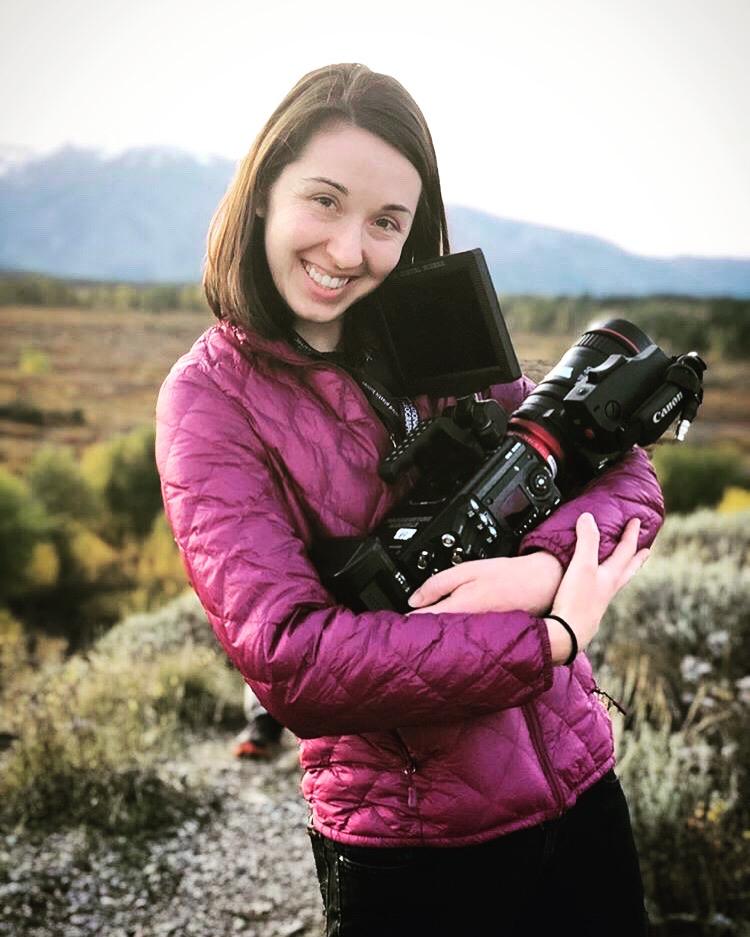
Alex Dainis is a science communicator and video producer creating content that makes science approachable, accessible, and fun. She began producing digital science education videos on YouTube in 2012 as a way to share her love of science with the world. She went on to complete a Ph.D. in genetics in 2018, solidifying her mission to make the language of genetics accessible to everyone.
Dainis is now a full-time science communicator, creating videos that show science as not just a solution to big problems but also the most fun lens with which to view the world. Her current work with organizations including the American Chemical Society, PBS Digital Studios, and the Boston Museum of Science uses storytelling, a conversational tone, and deep scientific research to meet the needs of each unique audience and reach over a million viewers per year.
Dainis was a 2024 award winner of the National Academies’ Eric and Wendy Schmidt Awards for Excellence in Science Communications, which honor exceptional science communicators, journalists, and research scientists who have developed creative, original work to communicate issues and advances in science, engineering, or medicine for the general public.
To mark a new year through the celebration of science communication, we asked Dainis about her experiences sharing science that affects people’s everyday lives and ways she makes scientific topics engaging and fun for viewers.
How did your interest in science communication begin, and what made you first fall in love with science?
I originally fell in love with science because I really liked asking questions about the world. That’s why I chose to specialize in genetics when I went to grad school. I felt that genetics was a tool that I could use to answer almost any question about biology. However, my science communication journey started by accident. I started making science YouTube videos in 2012 as a hobby because I really loved the beauty of biology and wanted an outlet to talk to more people about it. It was a way for me to combine my love of film with my love of science. But at the time, I didn’t know that “science communication” was a field, or that this outlet I had could be more than just entertainment. It wasn’t until much later that I realized how powerful the combination of science, approachable language, and online video could be to help introduce other people to the knowledge that I felt was so valuable in navigating the world around me.
I originally fell in love with science because I really liked asking questions about the world. That’s why I chose to specialize in genetics when I went to grad school. I felt that genetics was a tool that I could use to answer almost any question about biology. However, my science communication journey started by accident. I started making science YouTube videos in 2012 as a hobby because I really loved the beauty of biology and wanted an outlet to talk to more people about it. It was a way for me to combine my love of film with my love of science. But at the time, I didn’t know that “science communication” was a field, or that this outlet I had could be more than just entertainment. It wasn’t until much later that I realized how powerful the combination of science, approachable language, and online video could be to help introduce other people to the knowledge that I felt was so valuable in navigating the world around me.
You’re known for bridging science and everyday life in your videos, interviews, and other communications. What inspired you to create this bridge, and what techniques do you use to make your content accessible and applicable to everyday life?
It’s important to me that my videos feel like a genuine conversation. When I write a script, I always try to imagine that I am explaining a concept to a friend over coffee, not giving a lecture. This is how I genuinely prefer to discuss information with the people in my life, and so I think it helps keep the videos feeling authentic and friendly. It’s also incredibly important to me to approach my audience with empathy. No one has ever changed my mind about something or taught me something new by telling me that I am stupid, and I try to ensure that I never make my audience feel that way.
It’s important to me that my videos feel like a genuine conversation. When I write a script, I always try to imagine that I am explaining a concept to a friend over coffee, not giving a lecture. This is how I genuinely prefer to discuss information with the people in my life, and so I think it helps keep the videos feeling authentic and friendly. It’s also incredibly important to me to approach my audience with empathy. No one has ever changed my mind about something or taught me something new by telling me that I am stupid, and I try to ensure that I never make my audience feel that way.
Could you walk us through your science communication journey? How did you first start using video as a science storytelling medium?
I started my work as a science communicator before I even knew what a science communicator was. Shortly after graduating college, I combined my love of science with my love of filmmaking to begin a small science YouTube channel, Bite Sci-zed, in 2012. It was a passion project and a hobby motivated by enthusiasm: I enjoyed learning more about the world around me and wanted to share that with others.
Over the years, I began to comprehend the power that online communication holds — and the growing issues facing society’s understandings and interactions with science. Now, I’ve been on YouTube and other social media platforms for 12 years in almost every role possible, from writer and host for other channels to producer to voiceover artist and more. I’ve had the incredible pleasure to work for organizations including PBS Digital Studios, the American Chemical Society, Red Bull, and the Boston Museum of Science. I am incredibly grateful that my job means I get to be professionally excited about science on camera, spend time thinking deeply about the science that matters to me, and share it with others.
I started my work as a science communicator before I even knew what a science communicator was. Shortly after graduating college, I combined my love of science with my love of filmmaking to begin a small science YouTube channel, Bite Sci-zed, in 2012. It was a passion project and a hobby motivated by enthusiasm: I enjoyed learning more about the world around me and wanted to share that with others.
Over the years, I began to comprehend the power that online communication holds — and the growing issues facing society’s understandings and interactions with science. Now, I’ve been on YouTube and other social media platforms for 12 years in almost every role possible, from writer and host for other channels to producer to voiceover artist and more. I’ve had the incredible pleasure to work for organizations including PBS Digital Studios, the American Chemical Society, Red Bull, and the Boston Museum of Science. I am incredibly grateful that my job means I get to be professionally excited about science on camera, spend time thinking deeply about the science that matters to me, and share it with others.
In the past year, what science stories or topics have you communicated that particularly sparked your curiosity?
One of my favorite videos that I worked on in the past year was a video I produced at the American Chemical Society about the chemistry of color. In working on a prior video about counterfeit detection pens, I realized that my understanding of how color worked was incredibly surface level, so I pitched them the idea of diving as deep as we possibly could (in a 20-minute video) into how color works at the atomic level. It was an incredibly fun video that really tested my understanding of chemistry and brought me to some incredible locations, from filming crystals in the middle of the desert to visiting the Museum of Neon Art. I learned so much in making this video. Did you know that water is blue because the energy from visible and infrared light vibrates the bonds between the hydrogen and oxygen atoms in a water molecule? I didn’t, before making this video, and it totally blew my mind.
One of my favorite videos that I worked on in the past year was a video I produced at the American Chemical Society about the chemistry of color. In working on a prior video about counterfeit detection pens, I realized that my understanding of how color worked was incredibly surface level, so I pitched them the idea of diving as deep as we possibly could (in a 20-minute video) into how color works at the atomic level. It was an incredibly fun video that really tested my understanding of chemistry and brought me to some incredible locations, from filming crystals in the middle of the desert to visiting the Museum of Neon Art. I learned so much in making this video. Did you know that water is blue because the energy from visible and infrared light vibrates the bonds between the hydrogen and oxygen atoms in a water molecule? I didn’t, before making this video, and it totally blew my mind.
You often employ humor in your science communication. How would you describe your sense of humor, and what advice would you give to other science communicators looking to incorporate humor into their work?
I think my sense of humor tends to lean a little silly. I love the kinds of puns that make you groan rather than laugh, and I lean into a little bit of physical comedy with silly faces and exaggerated body movements. I think those things work for me because they are my genuine day-to-day sense of humor. I don’t try to use punchline jokes or any kind of stand-up comedy because they don’t come naturally to me.
That is my biggest piece of advice to scientists and science communicators trying to incorporate humor into their work: Do what feels natural because anything else is going to feel awkward and forced. If you’re a funny person, let your humor shine! If you’re not, don’t try to force it. Your audience can tell immediately.I think my sense of humor tends to lean a little silly. I love the kinds of puns that make you groan rather than laugh, and I lean into a little bit of physical comedy with silly faces and exaggerated body movements. I think those things work for me because they are my genuine day-to-day sense of humor. I don’t try to use punchline jokes or any kind of stand-up comedy because they don’t come naturally to me.
That is my biggest piece of advice to scientists and science communicators trying to incorporate humor into their work: Do what feels natural because anything else is going to feel awkward and forced. If you’re a funny person, let your humor shine! If you’re not, don’t try to force it. Your audience can tell immediately.
How do you see the future of science communication evolving, especially in the digital space?
One of the things that I find so impressive about digital science communicators is that they are constantly adapting to new platforms and new formats. When TikTok first came out, I thought there was no way to make a good science video in under 30 seconds. But people started doing it, and it became an incredibly powerful force for science communication. I think that constraints can inspire creativity, and we are constantly facing new constraints and new challenges in the digital space. I’m excited to see what new formats and obstacles we are faced with in the coming years, because I think that those two things together can only force us to become more creative and innovative in how we are communicating science.
One of the things that I find so impressive about digital science communicators is that they are constantly adapting to new platforms and new formats. When TikTok first came out, I thought there was no way to make a good science video in under 30 seconds. But people started doing it, and it became an incredibly powerful force for science communication. I think that constraints can inspire creativity, and we are constantly facing new constraints and new challenges in the digital space. I’m excited to see what new formats and obstacles we are faced with in the coming years, because I think that those two things together can only force us to become more creative and innovative in how we are communicating science.